The Digital Discoverers
The Digital Discoverers is a cinematic documentary series that tells the untold human stories behind the technologies that built the modern world, as told by the pioneers who created them.
Season One is structured as eight individual episodes, each centered on one pioneer and the human story behind a technology that changed modern life. With many of these innovators now between 75 and 95 years old—and with GPS pioneer Gladys West having died on January 17, 2026—there is a narrow window to preserve these firsthand accounts.
The people shown below are featured or proposed subjects. Participant status, written confirmations, archival arrangements, and supporting materials are available to qualified producers. Public profiles do not disclose confidential attachment status.
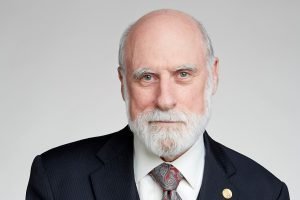

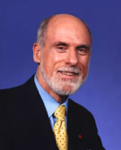
Vinton G. Cerf
Innovator & “Father of the Internet”
Cerf is the co-designer of the TCP/IP protocols and the architecture of the Internet. In December 1997, President Clinton presented the U.S. National Medal of Technology to Cerf and his colleague, Robert E. Kahn, for founding and developing the Internet. Kahn and Cerf were named the recipients of the ACM Alan M. Turing award in 2004 for their work on the Internet protocols.
Steve Wozniak
Computer Scientist, Inventor, Co-Founder of “Apple” A Silicon Valley icon and philanthropist for the past three decades, Steve Wozniak helped shape the computing industry with his design of Apple’s first line of products, the Apple I and II, and influenced the popular Macintosh. In 1976, Wozniak and Steve Jobs founded Apple Computer Inc. with Wozniak’s Apple I personal computer. The following year, he introduced his Apple II personal computer.
The Turing award is sometimes called the “Nobel Prize of Computer Science.” In November 2005, President George Bush awarded Cerf and Kahn the Presidential Medal of Freedom for their work. The medal is the highest civilian award given by the United States to its citizens. In April 2008, Cerf and Kahn received the prestigious Japan Prize.
Vinton G. Cerf has served as vice president and chief Internet evangelist for Google since October 2005. In this role, he is responsible for identifying new enabling technologies to support the development of advanced, Internet-based products and services from Google. He is also an active public face for Google in the Internet world.
The Apple II featured a central processing unit, a keyboard, color graphics, and a floppy disk drive. It was integral in launching the personal computer industry. For his achievements at Apple Computer, Wozniak was awarded the National Medal of Technology by the President of the United States in 1985, the highest honor bestowed on America’s leading innovators.
In 2000, he was inducted into the Inventors Hall of Fame and was awarded the prestigious Heinz Award for Technology. After leaving Apple in 1985, Wozniak was involved in various business and philanthropic ventures, focusing primarily on computer capabilities in schools and stressing hands-on learning and encouraging creativity for students.
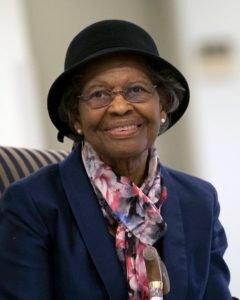

Gladys West
Mathematician Whose Work Helped Enable GPS
Gladys Mae West was an American mathematician whose precise mathematical modeling of the Earth helped make the Global Positioning System possible. Her pioneering satellite-geodesy work became foundational to modern GPS, and she was inducted into the United States Air Force Space and Missile Pioneers Hall of Fame in 2018. West died on January 17, 2026, at age 95—underscoring the urgency of preserving these innovators’ stories.
Lon Safko
Invented “The First Computer to Save a Human Life” Lon is an innovator, inventor, bestselling author, speaker, trainer, consultant, and is the creator of the “First Computer To Save A Human Life” as coined by Steve Jobs, Apple, Inc. That computer, along with 18 of Lon’s inventions are part of the permanent collection of the Smithsonian Institution in Washington, D.C.
In the early 1960s, she participated in an award-winning astronomical study that proved the regularity of Pluto’s motion relative to Neptune. Subsequently, West began to analyze data from satellites, putting together altimeter models of the Earth’s shape. She became project manager for the Seasat radar altimetry project, the first satellite that could remotely sense oceans. West consistently put in extra hours, cutting her team’s processing time in half. She was recommended for a commendation in 1979.
Along with 30,000 of Lon‘s personal papers. Lon also has 14 inventions in the collection of The Computer History Museum in Mountain View, CA.
Lon is the inventor of “Tooltips”, first to bring voice recognition, voice synthesizing, and home automation to market for the disabled. He holds three U.S. Patents for “Three-Dimensional-Internet-Advertising”.
Lon hosted the first ever PBS Television Special “Social Media & You… Communicating In A Digital World”. Lon is a 2017 Pulitzer Prize Nominee and author of multiple innovative #1 bestselling books including “The Social Media Bible”, breaking $2m in sales, “The Fusion Marketing Bible”, and Artificial Intelligence A.I. Chatbots.

Dr. Thomas A. Furness III
Inventor, Professor & “Father of Virtual Reality”
Dr. Furness is a pioneer in human interface technology and grandfather of virtual reality. Tom is currently a professor of Industrial and Systems Engineering with Centered Design and Engineering at the University of Washington. He is the founder of the Human Interface Technology Laboratory (HIT Lab) at UW
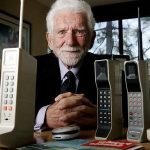
Martin Cooper
Inventor of “The Cell Phone”
Martin Cooper, is an American engineer who led the team that in 1972–73 built the first mobile cell phone and made the first cell phone call. He is widely regarded as the father of the cellular phone. On April 3, 1973, Cooper introduced the DynaTAC phone at a press
and founder and international director of the HIT Lab NZ. He is also Erskine Fellow and Adjunct Professor at the University of Canterbury, Christchurch, New Zealand and the HIT Lab Australia at the University of Tasmania, Launceston, Tasmania.
Prior to joining the faculty at the UW, Tom served a combined 23 years as a U.S. Air Force officer and civilian scientist at the Armstrong Laboratory at Wright-Patterson Air Force Base, Ohio, where he developed advanced cockpits and virtual interfaces for the Department of Defense. He is the author of the Super Cockpit program and served as the Chief of Visual Display Systems and Super Cockpit Director until he joined the University of Washington in 1989. He is credited as a pioneer in developing virtual reality and augmented reality.
conference in New York City. To make sure that it worked before the press conference, he placed the first public cell phone call, to engineer Joel Engel, head of AT&T’s rival project, and gloated that he was calling from a portable cellular phone”T

Nathan Schulhof
Inventor of the “MP3 Player”
Technology entrepreneur Nathan Schulhof invented the first MP3 player – Audio Highway’s ‘Listen Up’ in the mid-90s, unearthing a brand-new way to consume music, and thereby changing the industry forever. His idea was subsequently copied by his competitor, Philips, who tried to
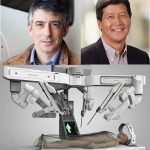
Jonathan Sackier & Yulun Wang
Innovators of the Da Vinci Robotic Remote Surgical Device
Dr. Jonathan Sackier and Yulun Wang are credited with developing medical technologies including laparoscopic surgery, amniotic stem cells and the first commercial surgical robot, AESOP, brought to market by Computer Motion which was
push him out of business to make way for their own device. Apple released the superior ‘iPod’ soon after, and the rest is history.
Schulhof’s ‘Listen Up’ device won an Innovations award from the Consumer Electronics Show in January 1997 and was later selected to receive the People’s Choice award from the Upside Magazine. His patents for the MP3 player were acquired by Sony in 2003.
It has been suggested that the MP3 player paved the way for smart phones, Steve Jobs has identified that the iPod touch prompted him to develop the iPhone. Without Schulhof’s important work, it is hard to picture how different our lives may be today.
then incorporated into Intuitive Surgical’s immensely successful Da Vinci robotic remote surgery system.
Jonathan Sackier
Jonathan Sackier, MD, trained as a surgeon in Britain, was recruited to the USA in 1989 and helped lead the laparoscopic surgical revolution. He is a physician entrepreneur with a diverse background including clinical practice, academic pursuits, invention, innovation and helping build and exit several companies. He has created IP portfolios, managed clinical trials and regulatory processes and participated in M&A, licensing, asset sales and public offerings. He is an experienced media commentator and public speaker, writes regular columns on medical matters for aviators and hosts podcasts and webinars on the highly respected EMG Health platform. He has published over 120 peer-reviewed papers, multiple book chapters and seven books and has been honored for his services to medicine with a variety of awards. He currently serves on a number of boards including AiM Medical Robotics, a company he believes can fundamentally change and improve the way various invasive procedures are performed.
Yulun Wang
Yulun Wang, a pioneer in telehealth, surgical robotics, and medical innovations, has joined the volunteer Board of Directors for Cottage Health, a not-for-profit leader in providing advanced medical care to California’s Central Coast region. A graduate of University of California Santa Barbara where he earned his Ph.D. in Electrical and Computer Engineering, Dr. Wang is the Head of Research and Development at Teladoc Health. Prior to that he founded the telehealth company InTouch Health in 2003. In July 2020, Teladoc Health acquired InTouch Health, where Dr. Wang is a fellow and executive sponsor for the company’s Artificial Intelligence initiatives. Prior to InTouch Health, Dr. Wang founded Computer Motion, a surgical robotics company. He was the principal architect and inventor of the voice-controlled robotic arm called AESOP, as well as the ZEUS robotic surgical system. Dr. Wang is an author on more than 50 technical publications and an inventor on over 200 patents. He was elected to the National Academy of Engineering in 2011 and served on its Peer Committee from 2012 through 2015. He was appointed as a Council Member on the California Council on Science and Technology from 2017 to 2020.