Project Materials
A production-ready foundation for an eight-episode premium documentary series with multi-season potential.
The Digital Discoverers is designed as eight 45–55 minute episodes, with each episode centered on one pioneer and the human story behind a technology that transformed modern life. The concept can also support a 90-minute feature-documentary adaptation.
Current Package Status
William Shatner has agreed by email to host the series. Six featured speakers are confirmed, with their identities and written status reserved for qualified producer review. Season One is structured; Season Two is in development. Production is intended to begin after a streaming or distribution arrangement is secured.
Efficient Production Model
The proposed approach uses a compact principal-photography plan, including approximately two hours with each living featured pioneer and William Shatner, concentrated primarily in San Francisco and Washington, D.C. The narrative can then be constructed through archival imagery, existing video, voiceover, graphics, music, and editorial work in post-production.
Exceptional Cost Advantages
Many participating pioneers are willing to appear without customary talent fees. Participants also own or control substantial personal intellectual property, photographs, video, documents, prototypes, and other archival material that may be made available to the production, subject to customary verification, releases, and clearances. These advantages can reduce production costs substantially, although professional crew, travel, insurance, legal clearance, licensing, editing, music, graphics, and delivery expenses remain.
Materials Available for Qualified Producers
The project includes a series treatment, pitch deck, episode concepts, participant correspondence and status records, preliminary financial planning, creator and host materials, archival examples, historic video, photographs, invention documentation, and supporting biographical research. Confidential contracts, participant identities, detailed budgets, and chain-of-title materials will be shared directly with legitimate producers under appropriate conditions.
Supporting Archival Evidence
The videos, documents, photographs, invention history, Smithsonian material, and personal accounts below demonstrate the depth of the underlying stories and the unusual amount of source material already available for development.
Quick Links
1993 SenSei Computer System For The Disabled Promo Video
The world’s first PBS Television Special on Social Media.
YouTube: “Social Media… Communicating In A Digital World”
Invention Overview
First Commercialization
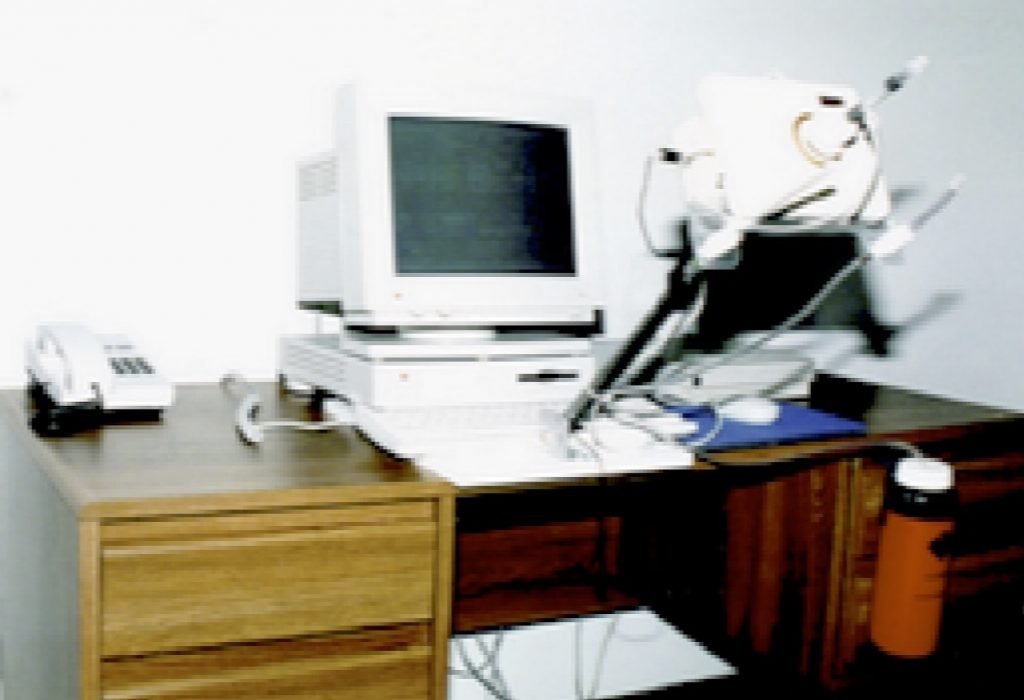
The development of this first computer system lead to the commercialization of the:
- First Voice Synthesis, where the computer will speak to you, which eventually lead to MacinTalk, and today’s Siri & Alexa.
- First Voice Recognition, which lead to “The Voice Navigator”, “Dragon Dictate”, and today’s Siri & Alexa.
- First A.I. Artificial Intelligence, where the computer learned from its users.
- First Chatbot, where the computer will hold a conversation and perform tasks that were verbally asked.
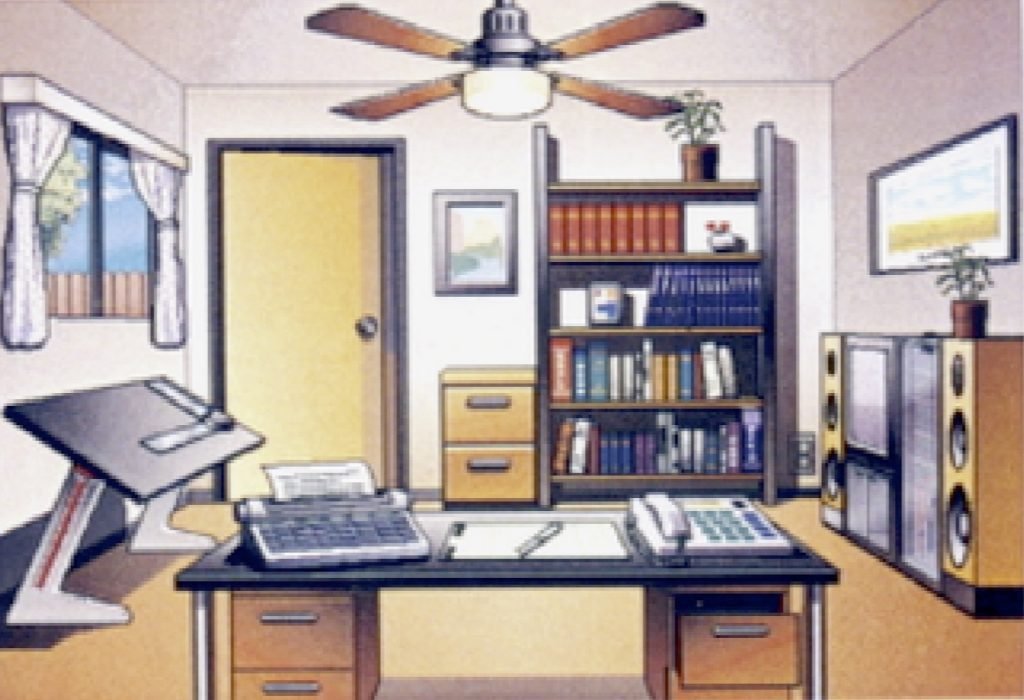
- First V.R. Virtual Reality, O.S. where the user interacted in a fully graphic representation of an office or home.
- First invented ToolTips so the disabled could learn how to use the system when they couldn’t hold a paper manual.
- First electronic User’s Guide, making paper manuals obsolete.
- First hands-free control of a computer through the use of an ultrasonic HeadMouse.
- First use of a computer through the use of only a sip & puff straw.
- First sip & puff controlled electronic hospital bed.
- First sip & puff controlled programmable infrared media controller.
- First computer controlled, hands free telephone.
- First portable voice for patients with the ability to speak called TypeTalker.
- First on-screen virtual keyboard which lead to the thumb use keyboard in all smartphones.
And, over 100 additional FIRSTS!
Smithsonian Institution & Computer History Museum
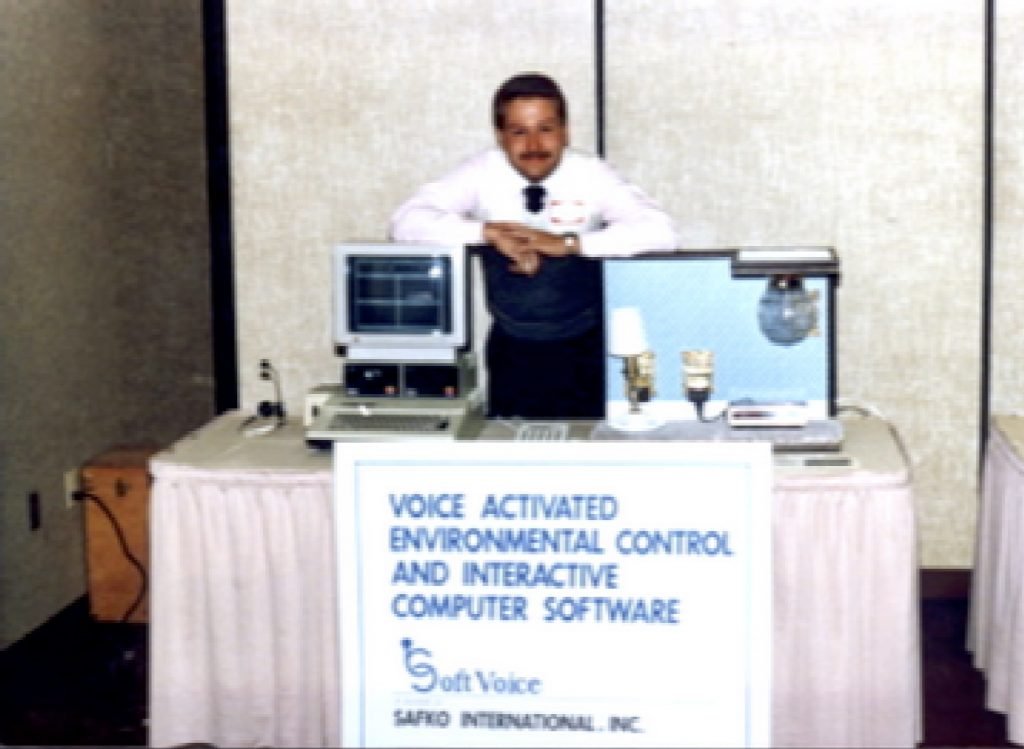
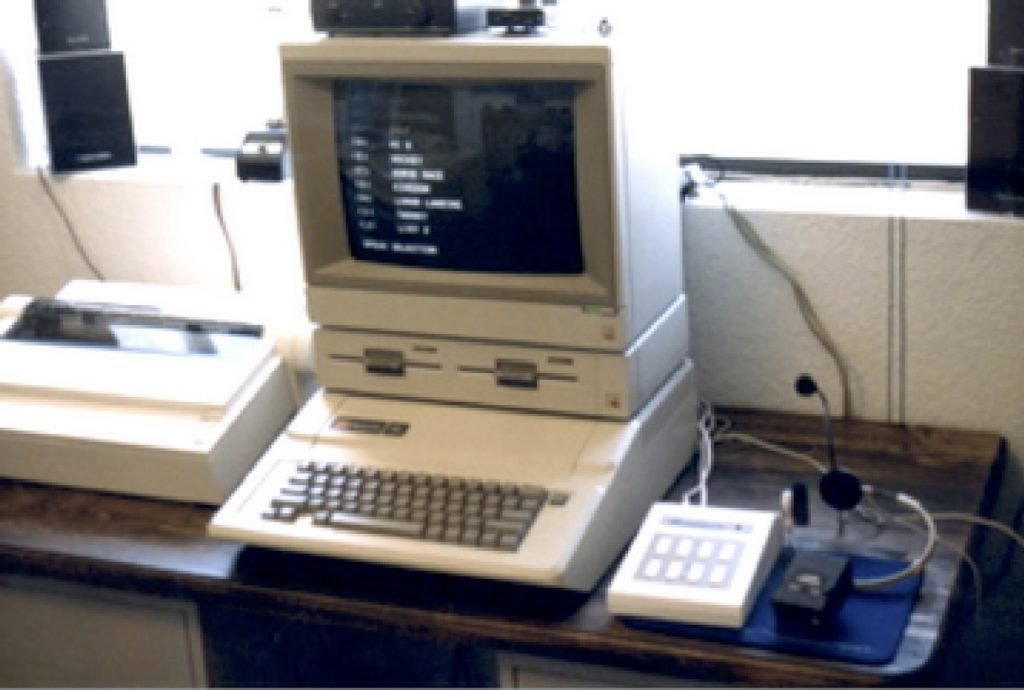
The first SoftVoice System created, Serial #0001, is part of the permanent collection of The Smithsonian Institution, Museum of American History, in Washington, D.C. along with 18 of my other inventions and more than 30,000 professional papers. The Director of The Smithsonian Institution said “We wanted your collection because, after exhaustive research, we felt that you mare more of a contribution to the Human / Computer interface as did anyone.”
The second SoftVoice System, Serial #0002 was in the lobby of Apple, Inc., labeled “First Computer To Save A Human Life”.
14 of the SoftVoice / SenSei inventions are also part of the permanent collection of The Computer History Museum in Mountain View, CA.
From The Original SenSei Brochure
The SenSei System from Safko International was designed to offer new independence for physically, cognitively, and communicatively impaired persons. By providing affordable, unassisted access to computing technology. SenSei enables persons to communicate and control their environment in the home, office, and classroom. A single-system approach, SenSei is comprehensive, flexible, and easy-to-use for persons of all ages. | The disabled are not the only ones who benefit from SenSei. Businesses, insurance companies, and others involved with the disabled also have a lot to gain. In fact, SenSei can significantly reduce the projected expense of a life plan for persons with long term disabilities. Businesses and educational facilities can efficiently employ the disabled while meeting Americans with Disabilities Act requirements. The SenSei system offers a world of opportunities for everyone. |


The People
First There Was Leon
In the winter of 1986, I met Jim on a Saturday morning after opening my computer store. It was between Christmas and New Year. Jim was a salesman for a large, national medical supply company in the northwest. He found me looking at a computer screen in the showroom and I was talking to it. I was saying “left, green”, “left, green”, “up, red”. Today, that is less than a big deal, but in 1986. It either was a big deal or I had lost my mind. He asked me what was going on. I explained I had taught the computer to listen and execute my commands, and I was now painting a Christmas Wreath. He pulled up a chair, sat down alongside of me, then began to tell me of Leon.
He explained, a man in his early forties, an engineer named Leon, had a close personal friend who was a quadriplegic, completely paralyzed from the neck down (C3 quadriplegic). It was Thanksgiving, and Leon felt that his friend should not spend this holiday home alone. Leon invited him to spend Thanksgiving with him and his wife.
After the Thanksgiving meal was through, Leon was returning his friend to his van to return him home, when the wheelchair Leon was wheeling down his front steps became unbalanced. Leon held firmly to the chair as to not let his friend fall down the concrete steps. In doing so, Leon lost his balance and fell over the top of the wheelchair, landing on the back of his neck on the concrete steps, he broke his own neck and instantly became a quadriplegic himself.
Once hearing of this injustice, tragedy, and irony, and with all of the emotion, confidence, and arrogance I had, I quickly exclaimed “if I couldn’t create a system for the disabled, no one could!” I thought “Oh, boy! I did it this time.” We talked for some time about the difficulties of quadriplegia, and especially of this type of accident, and of the psychological trauma related to this injury.
He described the rehabilitation process and the high fatality rate due to the lack of a will to live. He explained having to call for help to simply turn on a light, or turn off the television, was the first and most difficult freedom lost.
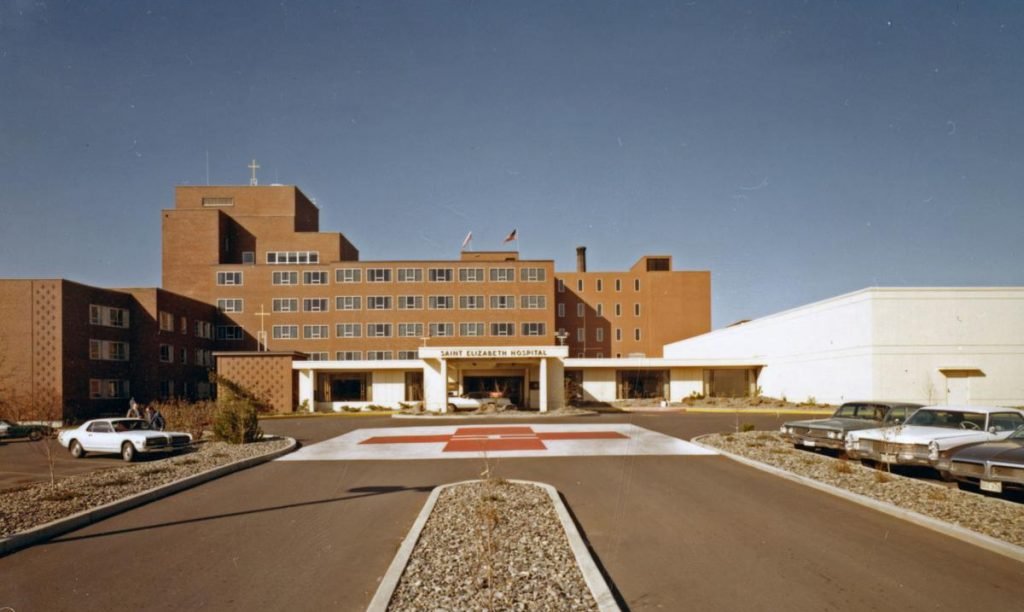
After I recovered from what I had just promised, I built the SoftVoice Computer System For The Disabled. SoftVoice was a concatenation for Voice Activated Software. With knees knocking, I demonstrated it to an entire entourage of doctors and nurses at Leon’s hospital, St. Elizabeth’s Medical Center. It was amazingly well received by standing ovations and tears. Leon was very skeptical and belligerent at first, but after trying the new system, he paused, turned to me, and said “How could someone like me ever live without a system like this.” First, the attending nurse cried, then his wife, I began to cry, and I couldn’t see who else after that.
It Was Herb That Kept Me Going
It was late one spring afternoon in 1987, came a phone call from a St. Elizabeth’s Medical Center that had heard of the success with the SoftVoice System and Leon. There was a patient named Herb they felt they were losing, he was going to die. Not because of any physical or medical reason, but because he realized his condition was permanent, and would never be better than he was. This thought was more than Herb could live with. The attending nurse explained if Herb could move his hands, he would have taken his own˜ life.
The hospital asked me to make an emergency installation of the computer system as the last hope to help Herb. This was the first time I had ever made an “emergency” installation of a computer in my career. At the hospital, I found what the nurses were talking about, Herb was horizontal in his dark room, unwilling to talk or cooperate in any way. I had been informed of the nature of his injury.
He was returning late one evening from his engineering office when Herb fell asleep at the wheel of his car. He was not wearing a seat belt, as his auto drove off the edge of the highway and began to flip. When Herb re-gained consciousness, he realized he had broken his neck and would remain a C-3 quadriplegic for the rest of his life. Within the following three months, Herb would lose his job, his home, and his wife of twenty years. I installed the system, explained its use as best as Herb would allow, and left the hospital.
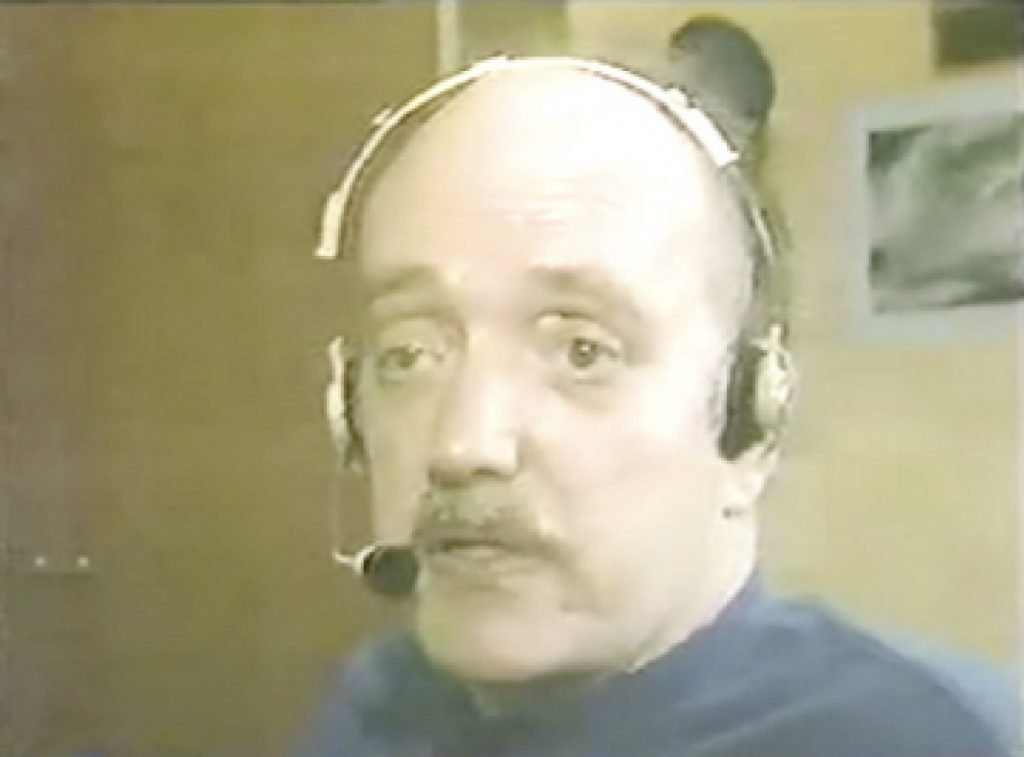
Nearly a month went by with no word of Herbs’ progress. I was afraid to call, and no one contacted me. I feared the worst and most probable. It was about then I received a call from the Director of the Spinal Cord Injury Unit. My secretary explained who it was and I was sure they were going to say, come pick up your equipment, Herb had passed away. The Director asked me to come to the hospital as soon as possible, without any explanation.
The following morning, I drove to Herb and the SoftVoice System. When I entered Herbs’ room I found something quite different than anticipated, Herb was sitting up in his wheelchair, which was a first for me to see. When I approached Herb, he reached his right arm out from under his blanket to shake my hand, although the experts said this would never be possible. When I left Herb he offered to “Race me to the cafeteria”.
The physical therapists reported because of the the miracle of the system, Herb saw a glimmer of hope, a possibility that he would regain some of his lost independence, and dignity. He refused to try the system at first, except for the times no one was looking, the nurses would see him using it in private.
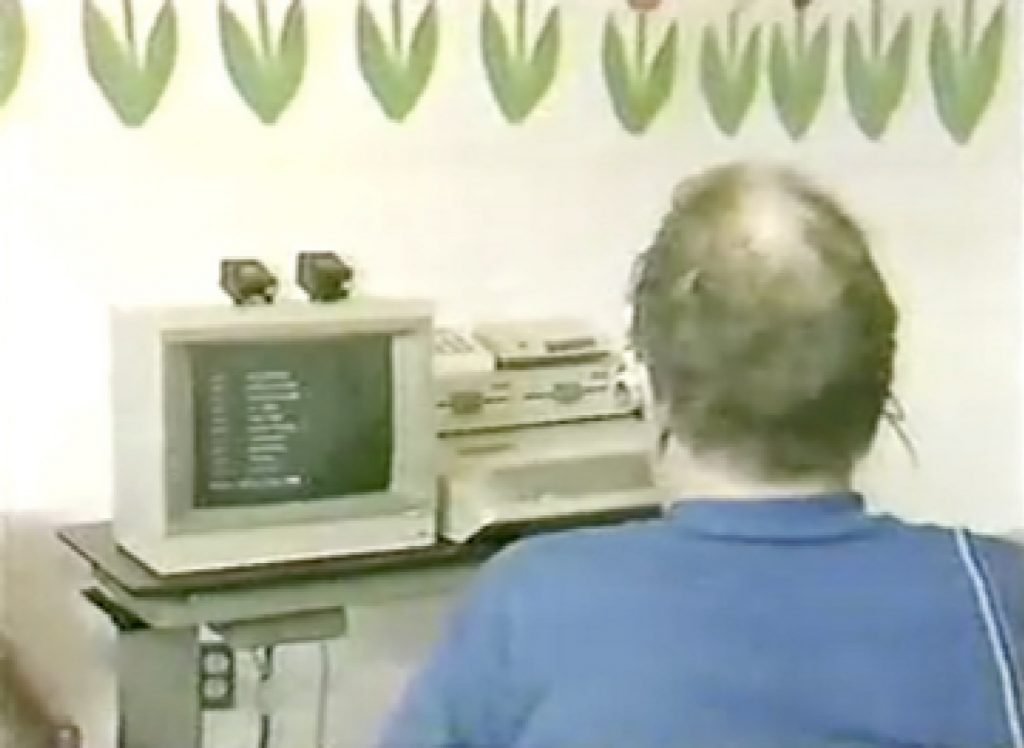
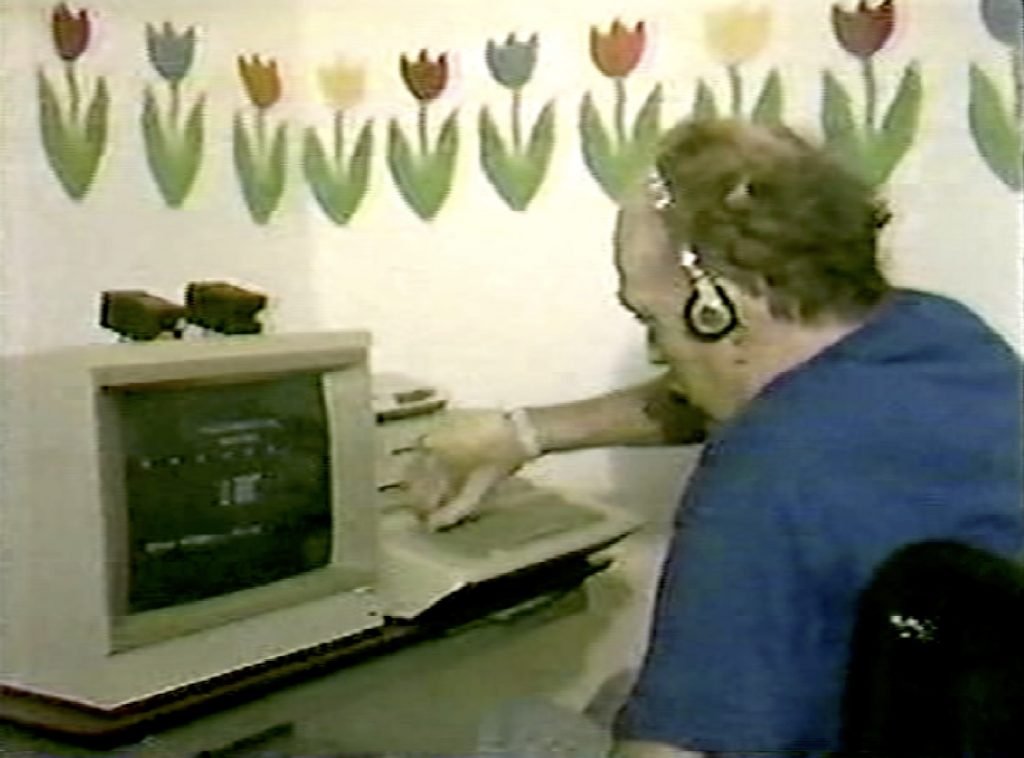
Within the first month, Herb re-gained some use of his right arm because the keyboard was in reach. The keyboard and its capabilities were more instrumental to Herb’s recovery than anything the therapists had been able to do for him. Shortly thereafter, NBC did a news special on Herb and the SoftVoice System, which lead to an interview on the Today Show*. Herb now owns his own condominium and consulting engineering firm in Seattle, Washington.
* This interview was seen by top officials at the United States Department of Energy, which resulted in them making me an offer I couldn’t refuse and go to work for the Hanford Nuclear Reservation where I designed the world’s first artificial intelligence system to track nuclear waste.
Eventually, he was motivated to push himself to use his right arm when the doctors said he would never move it again.
YouTube: Herb On News Center 25 NBC Television
Skip Goes To The Prom
Rick, a special needs teacher from the local school system contacted me desperately looking for help with a student he was currently working with. The boy Skip. He was 15. At the age of 9, while riding his new two-wheel bicycle with his friends. He rested for a moment behind a garbage truck. The driver of the truck could not see Ship behind his truck and began to back up. Skip could not get out from behind the truck fast enough so the truck hit skip and drove over his head and back. He lived, but only barely.
After many years of rehabilitation, Skip was mostly paralyzed with little mobility and could not speak clearly enough to be understood. The brain damage Skip suffered left him severely brain damaged. Rick was trying to do all he could to teach Skip and to reach whatever he had hiding deep inside his damaged brain.
Rick and I began working with Skip and immediately discovered something. Skip did have cognitive abilities after all this time. He was just not able to communicate them to the outside world. Using the SenSei System, he was able to use the Type-Talker (voice synthesizer) and speak in full sentences for the first time since the accident.
Skip was able to use training software on the system to improve his motion, memory, school work, and his communication skills. Everyone who knew Skip was astonished by his progress. He made more of a recovery in the first month by using the SenSei System than in the past 6 years of therapy and one-on-one counseling.
Within a short time, Skip asked if he could go to school and be in a classroom with other students. Rick knew he was up to the challenge. Within a week, Skip was attending classes with Rick’s help. He was happier than he had been since the accident. For the first time, Skip felt confident in himself. He felt confident he could accomplish anything.
And, to this end, one afternoon after returning home from school, Skip used his computer to ask his mom a very important question. He and his mom sat next to one another at Skip’s computer and Skip told his mom… “I met a girl at school. She is severely disabled like me. I really like her. Mom, do you think I could ask her to the prom? What do you think she would say?”
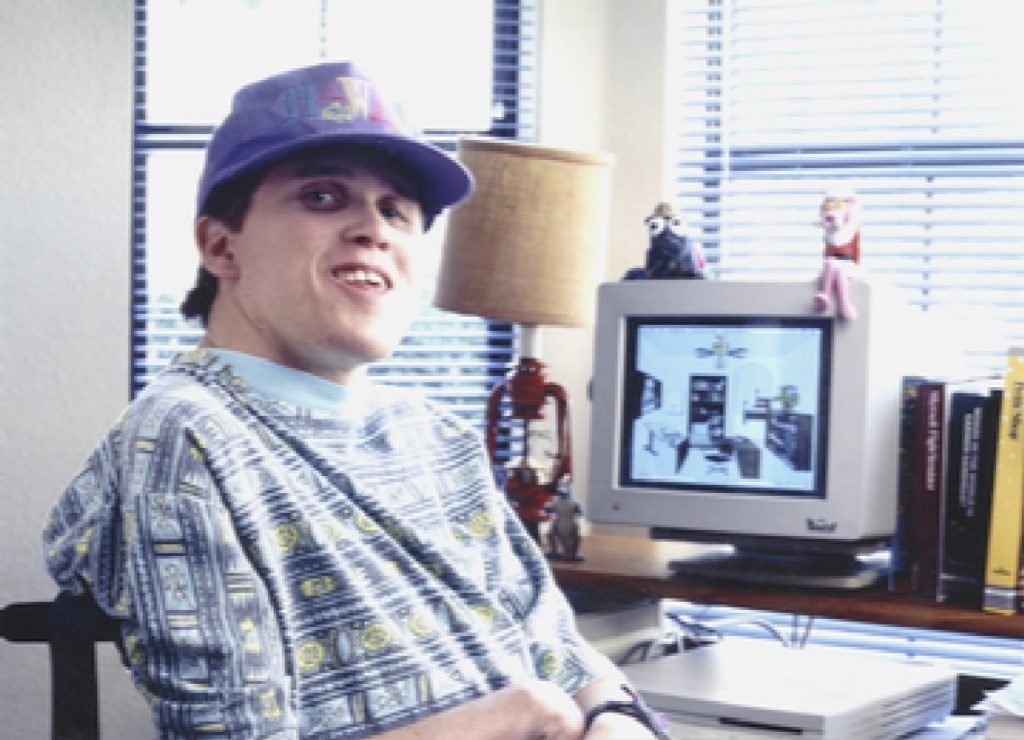
Skip’s mom immediately began to cry and hug Skip with so much love. His mom said, “There’s only one way to find out… call her!” Skip already had her telephone number and the SenSei System would allow its users to place phone calls hands free. So, Skip dialed her number. Skip and his mother waited anxiously for someone to pick up the phone. The girl’s mother answered the phone and Skip asked to speak with the daughter.
Skip had already typed in the letter that made the phrase “Hello, this is Skip from school. Would you go to the prom with me?” Skip hit the button to execute the TypeTalker. the phase was spoken clearly into the phone. Skip and his mom sat there in silence. they waited.
A moment later, the girl’s mom answered, “Of course she’ll join you at the prom!” Both moms were crying so much they couldn’t continue to speak clearly for minutes. Skip had the biggest smile he had had since the accident. So did the girl.
Then came prom night. Skip was wearing a tuxedo waiting in the gym for his date. Suddenly Skip looked up and saw his disabled date. She was dressed in a beautiful gown. The two moved their electric wheelchairs towards one another until they were side-by-side in a loveseat arrangement. Skip presses the button and asked, “Would you care to dance?” She smiled and nodded. The two maneuvered their electric wheelchairs out onto the crowded dance floor.
As they rolled their chairs from the edge of the auditorium out towards the dance floor, the crowd parted allowing them access to the floor. They locked chairs and began to move, first forward then back, then in circles. Skip and his date was dancing, actually dancing. Everyone in the auditorium began to cry and applaud.
That was the happiest day in Skip’s young life.
Confidential
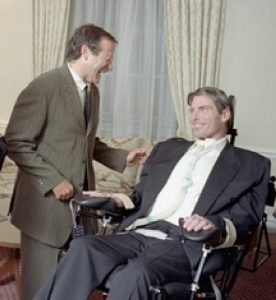
One of the last customers I worked with was Superman. Yes, Christopher Reeve who broke his neck in a horseback riding accident. While filming Superman, Christopher’s costars were earning $3.7m while he only was paid $250k. At the time of the accident, Chris was nearly broke and after, his $3,5m in doctor’s bills devastated him beyond his being paralyzed the rest of his life.
While struggling with his rehabilitation in The Kessler Institute, Robin Williams was always at his side. They met while studying at the Juilliard School early in their careers and became good friends. One day, Robin took Chris’ hand as he laid there crying about his financial condition, and said “Chris, as long as I am alive, you will never have to worry about another hospital bill again…” And Robin paid all of Superman’s bills for al long as Chris lived.
Chris, Drove SenSei
In a nondescript, eye-ease green hospital room in Boise, Idaho, lay a young girl by the name of Chris. She was only sixteen years old She laid paralyzed with an inoperable cancerous tumor in her spine. The tumor was pressing against her spinal cord, causing her to be paralyzed from the neck down. It was so invasive, she could not breathe on her own.
It really was the persistence of her nurse, Debra which finally got my attention. She had called me inquiring about the success of the SoftVoice system, and how it might improve the quality of life for this young girl.
I explained in exhausting detail that the system was based on voice recognition, a patient using a respirator, could not speak clearly enough to operate SoftVoice. She accepted that answer until she went back to work with Chris. Debra continually called over the following weeks. Each call ended in a “No I won’t sell you a system I know won’t work.” She would reply “Even if it only works a little, it’ll be good enough.”
Sometime in the second month, Debra began calling my wife, describing the torment and suffering Chris was going through, and that her dream in life (she knew that it would now be short), was to share her experiences with others that were similarly troubled. She felt she just might help them keep their strength and hope. Her communication skills were at this point, non-existent.

I thought about Chris often, especially when my wife would bring it up after more of Debra’s calls. I knew if I was going to help Chris, I needed some type of mechanical input device would be required. It would have to be very reliable and required very little motion or breath to operate. I realized, a HeadMouse and a Macintosh was the answer. I immediately went to work on completely converting the SoftVoice system which was currently on the Apple // to the Mac with a mechanical HeadMouse. I work tirelessly on the development, night and day. Within a few weeks, it was finished! It was the next generation computer to save human lives. It was called SenSei; the Japanese word of dignity for Master / Teacher.
On a Thursday, in the fall of 1987, I demonstrated SenSei to Chris. The following Monday, Debra called me with the news of Chris’ progress. She was sitting for the first time in several months and requested the doctors to remove her from all of her pain medication, she “wanted her head to be as clear as possible so she could begin to write.” Chris made significant improvements over the next two months, both physically and especially mentally. It seems when your mental attitude is optimistic and healthy, your physical condition follows too, and guess the same could be said for the reverse.
Chris spent the rest of her short life writing about her experiences and sharing hope with others in the same situation. Her strength gave others the will to live and she gave me the motivation to develop the SenSei System which went on to save many more lives. Thank you, Chris!
Liz And Her Smile
There is always one client that stands out from the rest. One that will always hold a special place in your heart. That one was Liz.
Liz was 28 years old and a mother of two. She woke up one morning with flu-like symptoms; muscle aches and a low fever. After several weeks it hadn’t gone away. Concerned, she went to the doctor only to find out she was diagnosed with MS, Muscular Dystrophy. Within 6 months, she was completely paralyzed from her neck down, her husband left her for her sister and petitioned the courts for custody of their two children, and had them legally taken away from her. She lost her job, needed continuous care, and had to move back home with her mother.
Her mother worked several jobs trying to provide for her care her daughter needed. With her mother gone all the time working, the need for on-site nurses rose. It got to the point where her mother could not make enough money to pay for the nurses needed to care for her the times she was away at work. It was a vicious cycle.
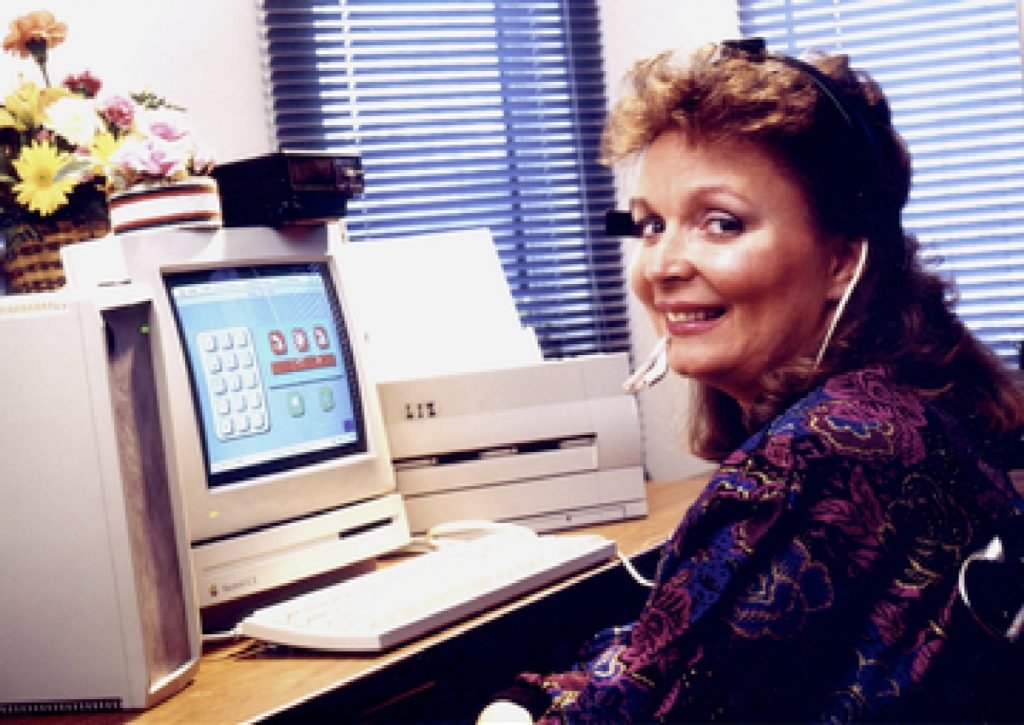
What Liz needed was a small measure of independence. Her mother would bathe her, feed her, prop her up in her wheelchair and place her in front of the television, then leave for work. Liz would sit in the same position all day watching the same channel, alone, until the nurse came at noon to feed her. She was always afraid of an intruder coming in and harming her as she had to leave the front door always unlocked so the nurses would have access to her. And in the winter months, if her mother forgot to turn on the lights in the home before she left for work in the morning, Liz would have to sit in the dark, alone until her mother returned from work. She and her mother lived a life of sadness and constantly being overwhelmed.
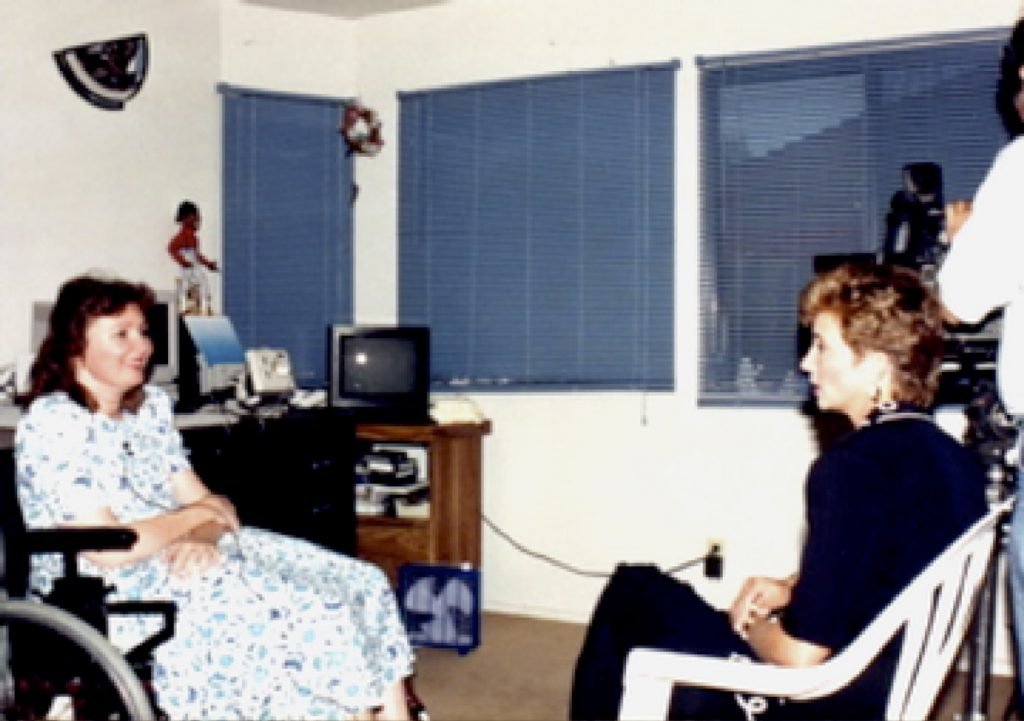
We installed the computer system in her home and immediately she realized, she could lock and unlock her door. Finally, she could be safe. She could change her own television channels and could turn on and off her lights at will. She could even make a telephone call anytime she wished.
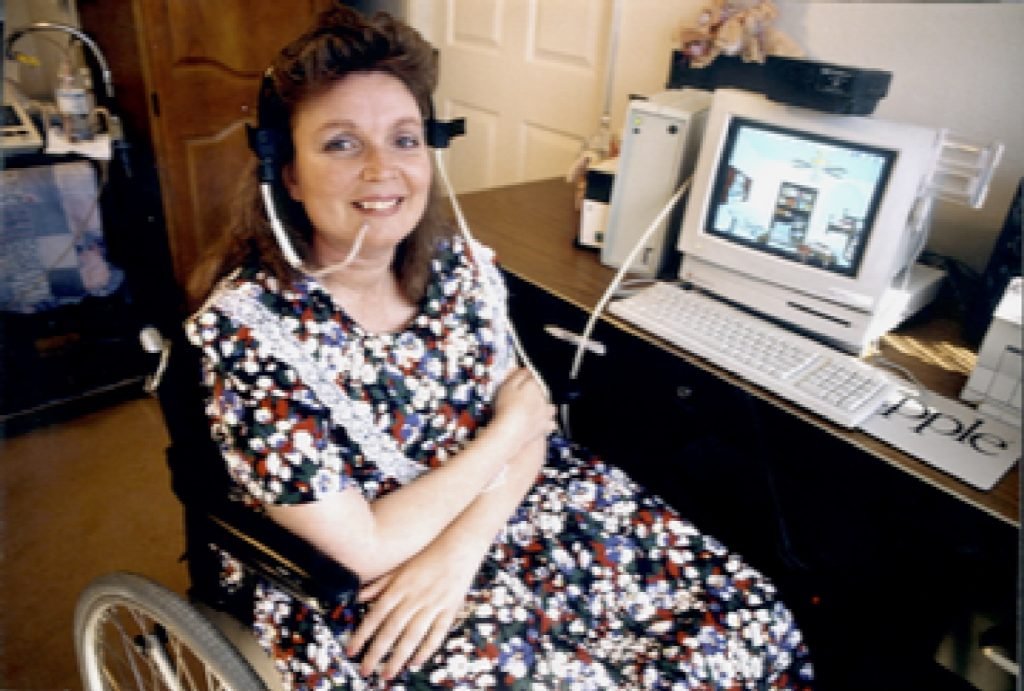
The feature Liz enjoyed the most was access to a computer. She was able to manage the books for her local church, write her life story, and even type 45 words per minute without the use of her arms.
Then came the tragedy. Her insurance company refused to pay for the system. Discounted as much as we could, it still was a couple of thousand dollars. Neither her mother nor I could take the system away from Liz. We would never take back the freedom, independence, and dignity it had given her.
By reducing the cost as much as possible and working with her church, the congregation did a special fundraiser and was able to finish paying for the computer system she so desperately needed.
Liz became somewhat of a celebrity in the city she lived overcoming great adversity. She was often the subject of the evening news as Liz accomplished more and more.
Innovative Thinking Conference
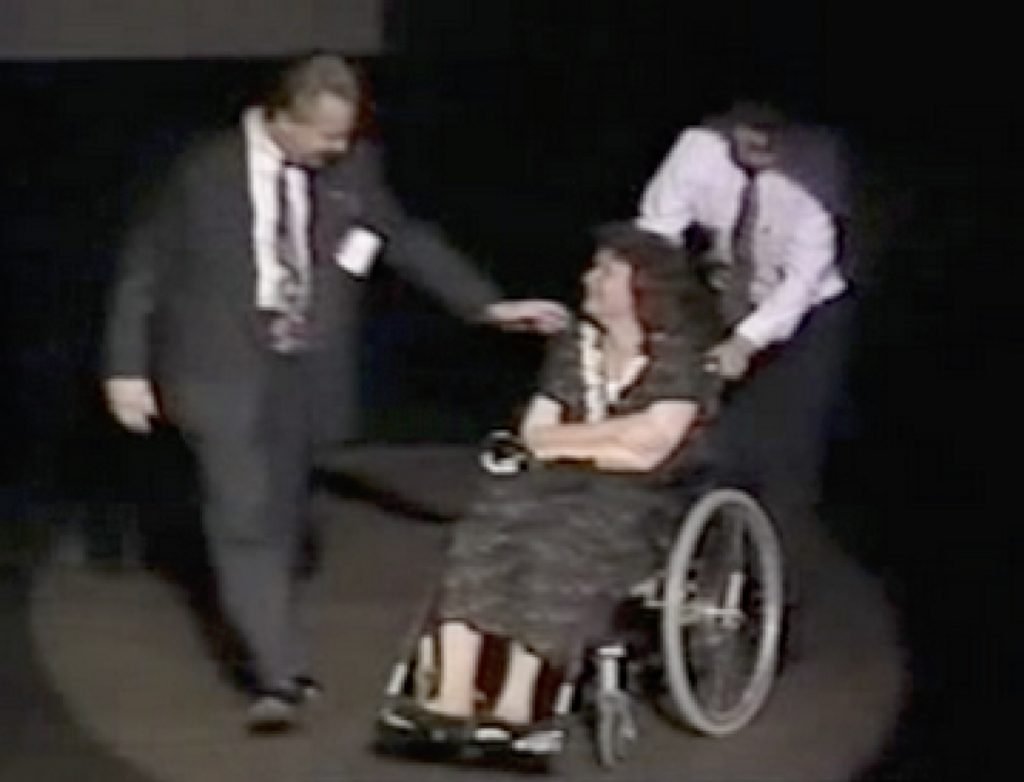
During my time working with Liz, I was asked to present the SenSei Computer System at a high level conference called The Innovative Thinking conference. The attendees were 400 presidents and CEOs of Fortune 500 companies. I was given 10 minutes before lunch to present a decade of life saving development. See the video link below.
I quickly introduced myself and presented the HeadMouse, TypeTalker, home automation, virtual reality operating system, artificial intelligence, hospital bed interface, hands free telephone, I.R. television remote, the other life saving technologies embedded in the system and shared several stories of the clients we had worked with. At the conclusion of the hurried presentation, I said, I know you all are anxious to get to lunch, but I want to introduce you to the person who, backstage has been running the entire PowerPoint slide show. That person running the show has no use of her arms or legs, she is paralyzed from the neck down. I said, Liz, will you please come out?
With that, my v.p. engineering, rolled Liz to the center stage. She smiled and bowed her head. I lowered mine. And, at that moment I could hear a roar coming from the audience. When I raised my head to see what the noise was, I saw all 400 top executives, standing, applauding, and… crying.
Liz found her way into their hearts as she did mine.
YouTube: Innovative Thinking Conference
The Girl Without Arms Or Legs
I was asked to demonstrate the system at St. Jude’s Children’s Hospital in New York, to an audience of about 45 doctors, therapists, bio-techs, nurses, and the like. When the demonstration had concluded, I was following up with a question and answer session, when one of the nurses in attendance, asked “Would it be O.K. if I have one of my patients try the SenSei System?” I exclaimed I would like that very much, yes, please. The nurse scurried off.
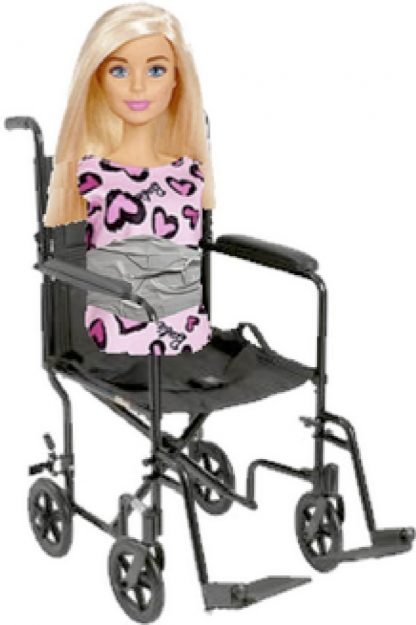
As I continued answering questions from the stage, I heard a wheelchair entering from my right behind me. This was a common sound in this type of hospital. After finishing my answer, I turned around I saw something that actually took my breath away. It was something I had never seen before. In the wheelchair moving towards me, was a young girl, possibly eleven or twelve at the most. She had the most radiant beautiful smile I’ve ever seen. She also had no arms or legs.
The sight was startling. I was instantly reminded that all was left of my four year old’s Christmas Barbie about mid-summer, was a head and torso. How could anyone have lived with so few body parts? When I looked closer, I saw she had been surgical taped, multiple times, around her waist, into the wheelchair. It was because she had no legs for ballast, if not for the tape, she would continually fall over. But the one thing she did have, was a smile as bright as the sun.
She pulled up in front of the SenSei System and immediately began using it. As fast as I would try to explain its’ operation, she was a step or two ahead of me. Out of the nearly 100 tasks it would perform, she immediately went for the environmental control. When she reached the demonstration room, she selected the lamp, clicked on, and the light on the demo unity came on. I saw her response, and watched her jump, in her chair. To this day I can not comprehend how someone without arms or legs could jump so hard.
Her smile became brighter than ever. Scanning the room, I noticed the attending nurse was crying. Once again, I didn’t understand the sentiment. I asked the nurse why the tears, and she exclaimed that in the twelve years of this girls life, this was the first time ever that she was able to turn on a lamp for herself without crying for help The nurse on the girl’s left began crying, I couldn’t hold it back any longer. I began to cry and excused myself to the parking lot and postpone the end of the presentation. The young girl remained turning on lights and the fan, typing, and playing games.
I suppose success can sometimes be measured in many ways other than money or material goods.
More stories available upon request.

My Own Disability Story
My first experience with being disabled was temporary while working on a construction site in the spring of 1983. Recently, I had designed a septic system for a 200 year old restaurant. While supervising the construction and placement of several large, in ground concrete storage tanks. After returning to my truck shortly after the lunch bell had rung. I was walking across the sloped parking lot to my truck, when I accidentally stepped on a piece of 3/4″ gravel, my ankle twisted under, and wasn’t able to shift my weight quick enough. Landing with all of my weight on the side of my ankle, needless to say, it broke.
There’s no need to explain the first twenty four hours to anyone who ever broken a bone. The next six weeks were nearly the same as the first twenty four hours, but with less and less pain, but with more and more frustration. The freedoms that were taken away were more than I could have imagined. I couldn’t work, answer the phone, change the television channel, turn on a light, or even carry a cup of coffee with crutches. House cleaning and laundry were out of the question.
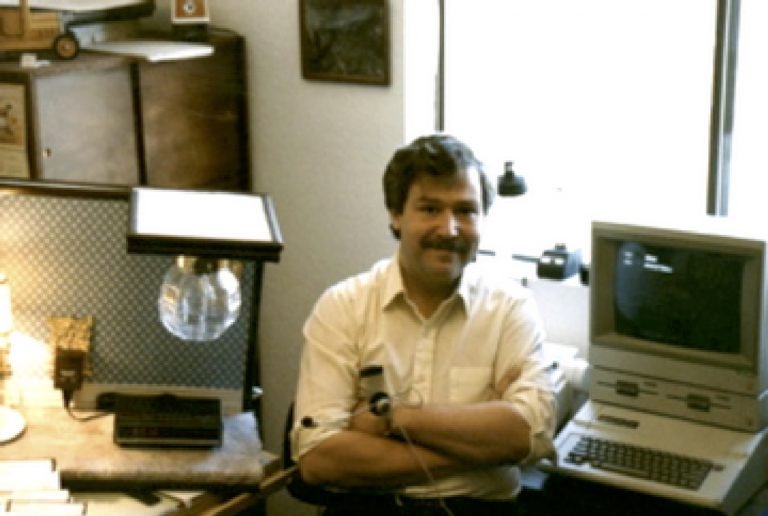
One freedom I did have was an abundance of time. Time to think about all of the things I wanted to do If only I could. The less˛ I could do, the more time I had to think about the things I couldn’t do. Losing my independence was probably the worst experience that ever happened to me. I guess that’s why it’s our most popular form of punishment in our penal system throughout history.
The single consolation was the fact that it would get better. I would walk again, in six weeks, in five weeks, in twenty seven days, tomorrow. I thought about that the most. Then began to realize all of those who would never be able to count down to their freedom.
This was one of those things I couldn’t stop thinking about, even when I tried. It’s like thinking of what will happen when your mother dies, or what if your child was to die. You’re afraid to even allow it into your mind, for fear that it might somehow influence the cosmos and it might come true, God forbid.
I truly realized just how lucky I was to be able to jump in the car and run to the store, or to run anywhere for that matter. I could answer the phone, turn on that light, write this story, while so many others couldn’t. I forced those thoughts as far down as humanly possible. I never thought of them again, well almost never, until Leon. They did always haunt me.
The first SoftVoice System created, Serial #0001, is part of the permanent collection of the Smithsonian Museum, in Washington, D.C. along with 18 of my other inventions and more than 30,000 professional papers. The second SoftVoice System, Serial #0002 was in the lobby of Apple, Inc., labeled “First Computer To Save A Human Life”.
14 of the SoftVoice / SenSei inventions are also part of the permanent collection of The Computer History Museum in Mountain View, CA.