Story Archive
Original footage, photographs, documents, demonstrations, and firsthand accounts that reveal the human story behind the technology.
This public archive preserves selected historical source material connected to The Digital Discoverers and demonstrates the narrative depth available to a documentary producer. It is evidence of the people, obstacles, breakthroughs, consequences, and personal sacrifices behind innovations that changed modern life.
Why This Archive Matters
Many of the featured pioneers are now between 75 and 95 years old. GPS pioneer Gladys West died on January 17, 2026, at age 95. The material below illustrates why these stories and surviving firsthand accounts must be captured now, before more of this living history is lost.
How Producers Should Use This Page
The archive is a selected public sample, not the complete production package and not a public record of current participant attachments. Confidential confirmations, correspondence, rights information, budgets, treatments, and chain-of-title materials are available separately to qualified producers.
Selected Historical Materials
The collection begins with early SoftVoice and SenSei demonstrations, television coverage, client accounts, team interviews, photographs, and the personal history behind the first computer credited with saving a human life. These materials illustrate the kind of owned or participant-controlled archival evidence that can enrich the series.
Review the Production Package | Request a Confidential Producer Conversation
Quick Links
The First SenSei Demo
First Client Saved
Today Show Insert
Liz Steals The Show
First Client Saved
The human consequences behind the technology
These accounts document both extraordinary achievement and the personal cost of innovation: sudden public recognition, business expansion, betrayal, loss, reinvention, and the persistence required to continue. They provide emotional stakes and character-driven material that can move each episode beyond a conventional technology biography.
The historical accounts are preserved in the creator’s voice. Production research, corroboration, rights review, and editorial fact-checking will determine how individual events are ultimately presented on screen.
Members Of The Team Interviews
Here is a short-list of names of people, along with a quick subject matter bio that we could interview for the pilot episode which includes business partners, doctors, other well-known inventors, etc.

Sherrie Safko
Sherrie Safko was by far the most important member of the team. She worked the hardest, tirelessly raising our three kids, keeping the house, and even doing the yard work so that I could be undistracted to do my work. She held a full time job that in many cases was the income we had for months. She was always a sounding board for ideas, concepts, and was a great judge of character. And, was a good sport when the fax machine kept going off from Germany at 2:00 AM in our bedroom keeping her awake on the morning she had to get up for work.
Not only did she never complain, she was always there boosting me up with her positive, we can do this, don’t quit attitude.
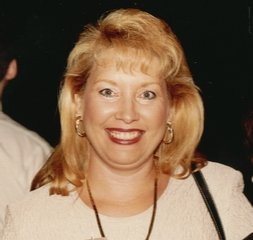
She met as many clients, business partners, and potential investors as possible and has a 100% perfect track record on know who to work with, when, and how. There were so many times she was exhausted, frustrated for me, and had to do without, but she never once complained.
The joke for so long when she was asked if she worked with me at the company, she would just answer, “Nope, it’s just my job that when Lon is tired and wants to quit, I just kick him back into play!”
Without her, this project would have never happened. It was on our first date she asked about the SoftVoice system she had heard about from my brother. I had saved several people’s lives, and didn’t realize it was a “thing”. So, I just kept working at the computer store. When she heard I wasn’t pursuing helping the disabled she said “That is the most selfish thing I had ever heard” and indicated the date was over.
It was Sherrie that insisted I make a career out of helping the disable. It wasn’t my idea, it was hers and at her insistence. She was my strength through the entire project, through all the highs and lows, from start to finish. Even after the project was destroyed by the take-over, when the Smithsonian Institution asked for the 30,00 professional records, she was the one who volunteered to go to the spare bedroom for three weeks straight, coping each individual piece of paper, choosing a document, removing the staples, copying it, re-stapling it, and placing it back in the folder exactly where it came out of.
The Smithsonian allowed us to keep the records for one month to copy them as long as Sherrie promised to place every piece of paperback in the exact same order it was in the box, all 30,000 pieces. That way, when this day came, we would have all the records necessary to tell this story accurately, 30 years later.
Sherrie, thank you for all you have done.
Keith Fisher
When I developed the technology as far as I could using my skills with software, I realized I had to find someone who understood hardware, PC boards, and could program chips. I contacted the local community college and asked to speak with the dean of electrical engineering. I asked him to introduce me to the brightest student he had. He retorted, he’s not only the brightest student I currently have but the brightest he ever met. The following day, Keith was working for me on the SenSei project.
He was working for free and got extra credit in his class studies. He quickly took my cumbersome wires, boards, and relays and designed one board that could do all that. As the company grew through fits and starts, Keith was always there, dedicated to the cause and most importantly, to me. We formed a lifelong friendship that lasts to today. Within a year he help me grow the company and he became the V.P. of Engineering, Board Member, and close friend.
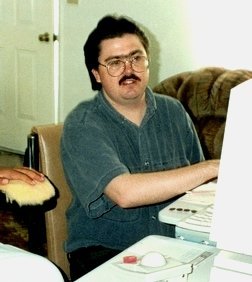
Dr. Sam Wise
Sam and I worked together on testing the SenSei System back in 1987 while he ran the disability division of the Palo Alto Veterans Administration Hospital. Sam and I became good lifelong friends since then. He moved to Los Vegas, started his own practice, and became one of the world’s most respected spinal cord injury physician. His patients included everyone from Jerry Lewis (who became one of his closest friends) to Seal Team 6.
Sam also worked with Dr. Thomas Furness, the inventor of Virtual Reality (whom I know), and Jaron Lanier, who invented the V.R. goggles. Sam was responsible for inventing the DataGlove while working under a grant from NASA. The DataGlove is the one used today by astronauts to repair satellites from the safety of the ISS to kids using his glove to play Nintendo using Mattel’s version of the glove. Sam will be the subject of another episode.
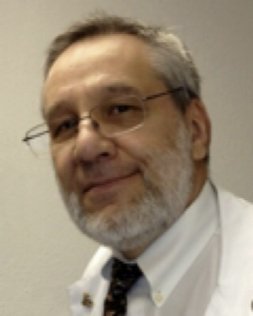
Lawrence Scarborough
Lawrence Scarborough, Managing Partner, Bryan Cave Attorneys at Law. Larry represented Apple against Microsoft in the 189 copyright infringement case Macintosh vs Windows. He represented me against Microsoft to defend SenSei against the operating system that was to replace Windows called “Bob”. That is also a story. We can reach him when ready. Story below.
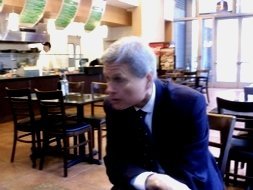
Steve Wozniak
Steve Wozniak, Co-Founder of Apple Computer and founder of Cloud9, a Los Gatos startup and inventor of the first Infrared, All-In-One Media Controller. I worked with him and Lawrence (?) to allow his device to work for the disabled. Will reach out when ready. The Woz will also be an episode as well.

Dr, Thomas Furness, the inventor of Virtual Reality (who will also be a guest). I met Dr. Furness at the University of Washington while trying to raise money for my ever struggling company. I am reaching out to him now. Dr. Furness will also be his won episode
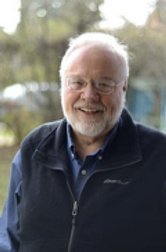
Other Potential Interviews
Barbara College, Head of Rehabilitation at NYU Medical Center, worked with patients and SenSei and worked with Christopher Reeve. Still trying to locate.
Ralph DiSibio, worked for Westinghouse Electric at the Hanford Nuclear Reservation in Richland, WA. Gave me the Westinghouse Entrepreneur of the Year Award. Reach out 4 different ways.
Ray Powers, Software Programmer, and early employee. Reached out on LinkedIn.
Aki Hirota, Graphic Designer. Designed all the last generation screens, buttons, and human interfaces. I sponsored him and his wife an American Work Visa which allowed him to become an American Citizen. Reached out through Linkedin.
Rick Warden, Special Education Therapist who worked with Skip using the SenSei System. Reached out through Linkedin.
Craig Orr, Senior Archivist, who came to Gilbert, AZ and chose 18 inventions and 30,000 professional papers for the Smithsonian Institution in Washington, D.C. Now the Curator for the Smithsonian: https://americanhistory.si.edu/about/contact-staff-member/473. I reached out through the Smithsonian email.
John Williams, Author of The American With Disabilities Act, the only non-politician at the White House invited to the signing of the Act, and a member of my Board. Damn… He died 9 weeks ago. All the more reason we need to do this!
In Memoriam
Alan Emsley
Alan Emsley was a close friend and trusted confident of this project. He was the C.F.O. for the Alaskan Pipeline and C.F.O. of my company in the later years. He was always there to protect me and the vision of the project through some unimaginably difficult times. When the company was taken over and dismantled at the end, the stress and pain he suffered caused him to shortly thereafter,have a heart attack and died. While his cause of death was officially was “Myocardial Infarction”, everyone who knew Alan, including his wife Pat, knew it was a broken heart that killed him.
My (Our) Stories
The title of this section is “My (our) Stories” because, with any major undertaking, it isn’t every just one person. The inventor, innovator, originator may come up with the initial idea, but it takes a village to raise that idea to a level where it becomes successful. This story is the same, it took a village of more than 100 players, each making their own contribution and different times, often when needed the most.
IBM - Wolfe
Mitchell, was the Vice President of IBM was introduced to me through John Williams, the author of the Americans With Disabilities Act to help him (IBM) establish a Disabilities Product Division. IBM was the largest producer of PC’s*, in the world at the time.

*The name P.C. was stolen by IBM from an earlier Steve Jobs presentation where Steve called his new electronic device a Personal Computer.
We spent hours discussing how IBM should do it, what products were available, what the company names were, and made introductions to all of the founders of those companies. The intent was for me to be hired as a consultant to IBM to create their Disability Products Division. Once Mitchell had all the information he needed from me, he ran with it and no longer returned my phone calls. I was counting on the income from this relationship to make payroll to my other employees. It never came and my employees continued to work for me for free.
*Mitchell was also attracted to my wife and made several inappropriate passes at her until I had to warned him to stop.
During the time I was working with Mitchell, I introduced him to Stavos (?). Stavos was the developer of the “Voice Navigator” for the Macintosh. Mine, which came years earlier, was still on the Apple //. He developed his prototype in his garage and wanted me to buy his I.P. and pay him a royalty. I needed the product if I was going to make the transition from the Apple // to the Macintosh, but I couldn’t afford to buy his company. I couldn’t keep my own company continuously open.
I agreed to improve his technology, both the software and hardware in exchange for the license free use and a promise to help him find a buyer for his company and technology. I introduced him to Mitchell to invest in or purchase his company. Michell was interested. I helped broker the deal between Stavos, Mitchell, and eventually, IBM purchased Stavos’ (and my work), for $100k all going to Stavos. Once again, I received nothing for my contribution.
As soon as IBM had all the ideas and intellectual property from Stavos, Mitchell / IBM push the founder out of his own company and took over the company. Eventually, IBM changed the name of the product from Voice Navigator to Dagon Dictate, which IBM sold shortly thereafter.
Sidebar:
On July 26, 1990, President George H.W. Bush signed the Americans with Disabilities Act (ADA). That afternoon the was a huge conference kicking off the legislature at the Watergate Hotel and Conference Center in Washington D.C. (remember this hotel?). The kickoff keynote address was done by four industry leaders, proponents, and activates for the disabled. Those speakers were Dennis Mitchell, representing IBM, Gary Moultan, representing Apple, John Williams, was the author of The Americans With Disabilities act, and me.and me.
Vignette
Marilyn Clarke
Marilyn Clarke contacted me in Mya of 1991. While divorced from her famous husband and inventor of the Ramjet for jet engines among other things, she was still concerned about his well being and quality of life. She was still living in the States and he was living out his years in Sri Lanka, suffering from post-polio syndrome.
She would call me in the early evenings and talk and talk about her husband, her life, and SenSei. She then began sending me letters. Though somewhat incoherent, it became obvious that she had a thing for me. It was sweet and I always enjoyed our conversations. I was a little uncomfortable with the direction of the conversation so, I eventually stopped taking her calls.
Oh yeah, one of the other things her husband did… He was a futurist and author. He wrote the book, “2001, A Space Odyssey”. Her husband was Author C. Clarke.
An interesting tidbit she shared with me one evening was, she told me something that at the time, no one else knew. Why me why the HAL 9000 was called HAL.
You are going to have to ask me in person why he did that.
United States Department Of Energy / Westinghouse Electric
I can’t sell the systems, I can’t pay my mortgage by working at the Apple Store which is failing. The insurance companies won’t pay for it, the patients can’t. At my wit’s end, I was asked to do a local 5:00 News Feature segment on “The First Computer To Save A Human Life” which I agree to do hoping to sell more systems. No sales ever came from it; however, within several days, I got a call from Ralph DiSibio an employee of Westinghouse Electric, the then management company on the country’s largest producer of Nuclear Missile Grade Uranium and Plutonium, contracted by The United States Department of Energy.
They said they have a Top Secret project they can’t seem to solve. They needed someone to design the world’s first artificial intelligence computer system to track nuclear materials. What I am about to say here, 20 years ago would have taken away my “Q” Clearance, and most like I would have disappeared. They lost 125 lbs. of Uranium.
Within 9 months, I completed this system and it worked perfectly. The world’s first of its kind. Although I could be shot for it, I still have a copy of the very first report it generated. It was the world’s first, Artificial Intelligent computer system for a practical application.
Summoned The The Federal Building
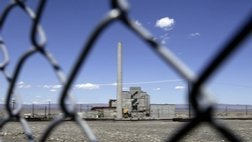
Shortly after completing the A.I. System, I was summoned to the Federal Building in downtown Richland, Washington, where I walked past armed guards holding M-16 assault rifles. I was lead to the executive conference room where the conference table was the size of Wyoming. I sat at the far end of the table, terrified. On the other end was top officials from Germantown, MD.
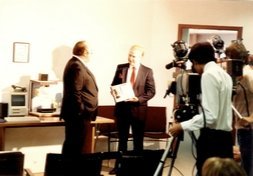
there was a long silence when someone spoke. They said they all had arrived the previous day for a big meeting at Hanford and today, they all saw me on a Today Show segment I had filmed over the weekend. I quickly asserted that I did the segment on my own time on Sunday and I worked on the project on my own time at home. They stopped me from talking.
They said they didn’t want an employee of their working with nuclear waste when they could be helping the disabled. They terminated my employment right there and then. I was devastated! I couldn’t afford to lose my job!
They indicated the meeting was over. Ralph DiSibio was present at the meeting and he asked me to follow him. I assumed he was going to just escort me to the lobby and I would have to drive back to my office to empty out my desk. Instead, the was a black Suburban waiting out front. He instructed me to get in. We began driving out towards the desert. I was sure they were going to execute me or push me out and leave me for dead.
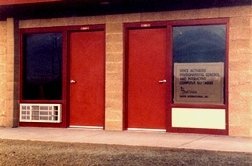
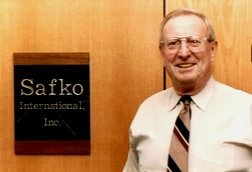
After 15 Minutes, we arrived at a new campus office type park, they drove past the main entrance and around to the side of the building. They told me to “get out”. Ralph also exited the vehicle. He walked around the front of the Suburban and motioned me to walk with him. Confused as hell, I followed. We stopped in front of one of the office suites and he pointed to the door. When I looked, I saw the words, “SAFKO INTERNATIONAL” on the glass. I turned to him asked “WHAT?!” He smiled and handed me the keys to the suite.
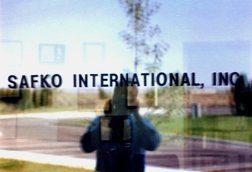
He said this was my new office, a place where I could work rent free on the computer system to help the disabled. He instructed me the space was rent free for as long as I needed it.
My response was somewhat ungrateful and a bit shocked. I told him the 2,000 s.f. of space was empty. I had no office furniture or any way I could work here. He turned to me and said. Be here tomorrow morning at 9:00 AM and started walking me back to the back seat of the Suburban. He drove me back to the Federal Building and simply said, “O.K, you can get out here.”
Dazed, confused, and angry, I rushed back to my old office and called my new wife and told her of the strange occurrences that took place over the past several hours and neither of us could understand what happened.
The following morning as instructed, I arrived early the next morning not knowing what to expect. At 9:00 AM SHARP… two semi-tractor trailer pulled up and a team of moving men began unloading government issued office furniture, big, heavy, drab olive green desks, chairs, file cabinets, and everything else you could imagine. After about an hour of disbelief, the 2,000 s.f. office space was filled with everything I needed to start my new full time business of helping the disabled.
Several months later, I was awarded the Westinghouse Entrepreneur of the Year Award for my work with the disabled.
The On-Screen Thumb Keyboard
It was early spring of 1986 and the SoftVoice (Voice-Activated-Software) computer system had been up and running fir several years and had already saved several people’s lives. Even though the voice recognition was working as planned, it was still cumbersome and required extensive voice training and occasional retraining.
I wanted to explore the possibility of moving the system to the latest Apple offering, the Macintosh. The problem was, there was no way to modify the Mac. After Franklin Computer stole the Apple ||’s Ram code directly from the chip to knock off the computer and produce a cheaper version, Steve Jobs was never the same. His paranoia got the best of him and he completely locked down the Macintosh case preventing anyone from even looking at what was inside without a special tool that only Apple sold.
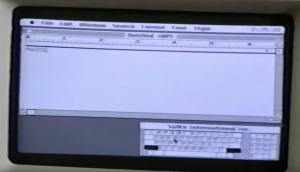
The apple || was design with what was called, open architecture. This mean that everyone had access to the internal workings of the Apple || and could create add-on daughter-boards and software extending the capabilities of the system. It was this ability to enhance the Apple || which allowed me to add a daughter-board to give it the capability to recognize voices, and another to speak in a synthesize voice.
Besides the inability to add circuit boards to the Mac, it wasn’t easily programmed. The Apple || had great BASIC Language programming tools, while the Mac had none. Then came HyperCard.
HyperCard with the brainchild of Bill Atkinson, one of the designer / programmers for the original Apple ||. It was HyperCard that gave me the ability to easily program the Mac. I say easily, but it meant learning a brand new programming languages on a whole new technology platform, the Mac.
The other hurdle was, Mac was a visual operating system or a graphics based machine while the Apple || was a DOS (Disk Operating System) C:// based text machine. That, coupled with the fact that the New Mac had something no other computer had a mouse as it major input device. What the hell was a “mouse” anyway?
HyperCard solved the programming problem but did not solve the mouse input problem. I knew I needed to conquer the mouse, or I would never be able to port (move) the SoftVoice System to the newest technology and guarantee its future.
After extensive research and I mean extensive research, I found a piece of hardware that might solve this problem. I emphasize the term “extensive research” because in 1986, we were still a decade away from having a world-wide-web, the Internet. So research at this time in history was grueling and time consuming. I found the Prenke-Romich, Headmaster for the Mac.
It was interesting, effective, and EXPENSIVE. While a mouse could cost $50, the HeadMaster cost $800. And it didn’t solve the biggest problem of running a Macintosh when you couldn’t move your body from the neck down and were paralyzed. It could interface with a Keyboard.
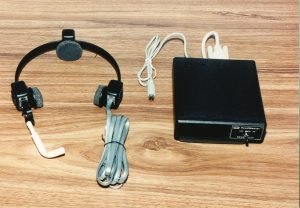
The HeadMaster moved the mouse and even clicked the mouse though a puff-tube that ran down from from the headset and you placed in your mouth and “puffed”. The mouse movements were controlled by three “dime-sized” ultrasonic sensors built into the headset. It used ultra-sonic triangulation to move the mouse.
This is just a fancy way of saying, the headset sent three ultra-sonic signals out to a receiver which sat on top of the Mac and it would sense which of the three senders were the closest. This controlled the up-down / right-left movements of the mouse.
The HeadMAster was designed to free your hands from moving the mouse. It was discovered early on with the Mac, that placing your hands on the keyboard to type, then moving them off the keyboard, locating the mouse, moving it, clicking it, then repositioning your hands back on the keyboard was distracting and slowed the typist. The HeadMaster solve this one problem.But, I had a different problem. A quadriplegic could never place their hands on any keyboard. They couldn’t place their hands anywhere. I needed to solve the no-hands keyboard problem.
I looked at all of the functions of the HeadMaster and realized that I had motion and a click. I thought what if… Here’s that famous “what-if” question again that seems to permeate all of my discoveries. What I started with a movable modal. I bet you never heard that expression before. A movable modal is a small window, with nothing more than a workspace and a close box.
I knew the new disabled keyboard would have to be movable so it didn’t block any portions of the screen. Then I went to work. I created a tiny-tiny buttons, one for each of the lower case buttons on a standard keyboard and placed them in the familiar QWERTY (look this up) layout. The second task was to create a “shift” button. That’s when the programming began.
If you were to take your mouse and click the tiny “shift” button, all of the names of the buttons were programmed to changed from lower case to upper case on the screen. If you click the shift button again, all of the button names would change back to lower case. At this point, I was happy with the GUI (Graphic User Interface).
I then created two set of code for each of the many buttons in this modal window. If you click the mouse on any of the buttons, the program would place that lower case letter in the active work window and if the shift key had been previously clicked, the program would place the upper case letter in the active window. Simple… Right? I did it! I now had a keyboard that would work with any off-the-shelf Macintosh software and the user could type without a keyboard even being connected to the Mac! This meant that my quadriplegics could use the move and click HeadMaster to also type.
I contacted Prenke-Romich with this new idea and they ran with it. Their HeadMaster wasn’t selling because of vanity. Women didn’t want to wear a cabled wire tethered headset in the office. And they said it mussed their hair. But it was no perfect for disable who couldn’t use a keyboard. I worked with them for several years giving them constant updates of the our software for free and designing cables
Prenke-Romich’s gratitude and ethics from this point in the story on is a different story for another time.
So, by June of 1986, I had all I needed to move the SoftVoice System for the Disable to the new, SenSei System for the Disable. And in doing so, I created the world’s first on-screen keyboard. But, the story didn’t quite stop here.
The keyboard that everyone is accustomed to is a thumb-on-screen keyboard. So when did my screen-board become touch sensitive?
Back in 1986 there were no “touch-screens” commercially available… yet. It wasn’t until 1994 before that technology became available. It was a Radeon Monitor that had the first capacitive-touch-screen. As my clients weren’t able to “touch” anything it wasn’t a big deal not to be able to use my keyboard in a touch system. I always thought it would be cool if I could.
Then in 1994, it happened. At that time, I was partnered with a company called DataPhase, which was the last incarnation of the original Computerland. The founder of Computerland, Ed Faber and I became friends and I purchased all of my Apple products through his company.
I got a call from Ed one day and he asked me to come by his office in North Phoenix that he had a surprise for me. When I walked into his office I saw two, huge bulky monitors on his side table. He told me these were the first “touch-screen” monitors and he wanted me to take them for experimentation and keep them! While conventional computer monitors were selling for around $100, these cost a whopping $1,200 each! And, there was more to the story.
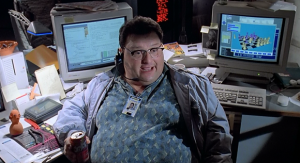
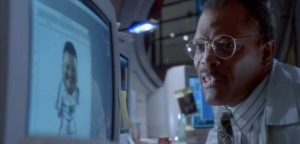
I asked him why he would these two very expensive monitors and let me have them to use for free. He said… He just got them back from Steven Spielberg in Hawaii. He said they were the two monitors used in Jurassic Park! They were the monitors in the “Ah, ah, ah” scene! He went on to tell me that Dataphase had loaned them to Steven Spielberg for the movie and Dataphase had written them off. They were mine!
I rushed back to my office, cleared the bench, set up one of these gigantic monitors, booted the SenSei System, and… in May of 1994, touch-typed for the very first time. On the monitors from Jurassic Park!
And, as they say, the rest is history. That is the same on-screen thumb-keyboard that you see in every smartphone and tablet world-wide.
Locating SoftVoice, Serial #0002
May 13, 2005
I just got a call from Apple and spoke with Lilly. She’s worked at Apple Computer, Inc, Headquarters at One Infinite Loop, Cupertino, California (main 408.996.1010 & her direct line at 408.974.1840). She’s the one that has been working on locating the original SoftVoice Computer System at Apple, for the past several weeks.
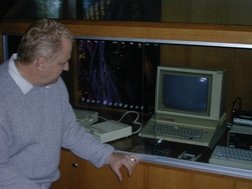
Interesting Note I just Found
Locating SoftVoice, Serial #0002
May 13, 2005
I just got a call from Apple and spoke with Lilly. She’s worked at Apple Computer, Inc, Headquarters at One Infinite Loop, Cupertino, California (main 408.996.1010 & her direct line at 408.974.1840). She’s the one that has been working on locating the original SoftVoice Computer System at Apple, for the past several weeks.
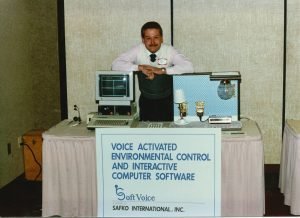
She said that she remembered seeing the SoftVoice System in Apple’s Lobby and the sign that read “The first computer to save a human life”. Her quote.
She’s made a lot of calls and has it narrowed down to three possibilities:
1) It might have been donated to Stanford University and now resides in the library of their Bill & Melissa Gates Math and Science Building;2) It was donated to and may be on display at The Computer Museum in Mountain View, California (does this ring a bell?); or,
3) It might be in Apple’s storage facility in Sacramento, California. If it is, it was put there after Apple’s remodeled their headquarters a few years ago.
She thinks the latter is the most likely possibility. That means that it’s not currently on display (like my Bible); however, Apple still owns it, she will find it and give it to me!
She’s placed some more calls today and should have an answer by the end of next week.
Vignette
Dedication
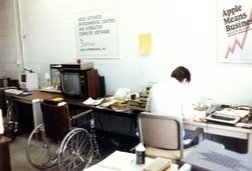
Talk about dedication. It was only the previous week, I found him sleeping in his car because he was locked out of his apartment for back rent. He was only eating cantaloupe and sleeping in his car. I came into the office early one morning and found him sleeping in his car. When I questioned why he was sleeping in his car, I also found out that for the past several weeks, all he could afford to buy to eat was cantaloupe. I asked him why he didn’t tell me and he said because he didn’t want to distract me from what we were doing. Now that’s dedication.
Christmas Brunch
It was 10:30 AM Christmas morning of 1990 when Keith Fisher was supposed to be at my wife’s and my home at 10:00 for brunch. My wife said how can we call him, he doesn’t have a home phone (this was before cellphones). I told her not to worry, I knew exactly where he was. I picked up our landline, called the office, and turned to my wife, and said “Watch.”
About 6 rings later, the phone was answered with a distracted “Hello?” I said “Keith, where are you? You’re late.” Keith answered “Late for what?” I said, “Christmas Brunch, of course!” He asked, “When is that?” I answered, “A half hour ago.” Keith then asked “Oh? Is today Christmas? O.K. I will be over in a little while.”
My wife said how can we call him, he doesn’t have a home phone (this was before cellphones). I told her not to worry, I knew exactly where he was. I picked up our landline, called the office, and turned to my wife, and said “Watch.”
About 6 rings later, the phone was answered with a distracted “Hello?” I said “Keith, where are you? You’re late.” Keith answered “Late for what?” I said, “Christmas Brunch, of course!” He asked, “When is that?” I answered, “A half hour ago.” Keith then asked “Oh? Is today Christmas? O.K. I will be over in a little while.”
Mercedes Investor
Just a quick humorous story. When the entire company consisted of myself and one other employee, Keith Fischer, we were desperately seeking funding. the two of us working around the clock developing the computer system, software, graphics, PC boards, and other electronics. In retrospect, I spent 90% of my time trying to raise money, and only 10% of my time actually working on the product.
There was an afternoon in 1990, that I was working on my Nth revision my company business plan and I found an investor who was interested in investing and saving the day. Maybe, if he invested even a small amount, I could pay the phone bill, the rent, make a mortgage payment and if there was anything left over, actually give Keith some money to pay his rent.
The potential investor had asked me to provide him with my Social Security Number so he could do a “Credit & Criminal” background check before he invested. This was standard for this type of deal. I told him, he would find a clean criminal report and he should sit down when he read the credit report.
About 1:00 PM on a random weekday, my office phone rang and the caller identified himself as the manager of the local Mercedes Benz dealership. He asked If I was Mr. Safko, and I said “Yes, how can I help you?” He said, “Would you like to pick up your new leased Mercedes today at 3:00 PM as they planned?”
I yelled “What?! I never leased a new Mercedes!” He said “Of course you did. You’re the president of Safko International, right?” I said “Yes, but I never leased a new Mercedes!” then I asked him if he met me and he said yes, we spent most of yesterday together. I asked him what I looked like and he described the new potential investor. I explained to the manager what was going on.
It seems the potential investor was impersonating me, using my name, title, personal contact information, and my Social Security Number to lease the new Mercedes. Once the manager understood what had happened he was amazed that someone would pull that! He asked what I wanted to do and I told him.
Call the police and tell them what was going on. Ask them to have several officers at your dealership today at 3:00 PM. And when I walk in… I mean the potential investor pretending to be me and committing fraud and grand larceny, simply walk over and handcuff him.
The following morning, I got a call from the manager. the plan worked perfectly and the potential investor was last seen being pushed into the back of a patrol car. This one, disaster was averted.
Vignette
Ceased Engine
It was the winter of 1991 and the company was struggling as much as ever. We were working out of a little office park space, just Keith Fisher and myself. We would sell a system, but what we needed to build the next system, pay some bills, and if there was anything left, Keith would get it. My wife Sherrie worked her a** off the whole time keeping our family afloat working as a salesperson in a mall jewelry store. On her days off, she would even do the yard work, anything that would free up my time to create the systems to help the disabled.
On a random Saturday, while I was in Sweden translating the Sensei Software from English to Swedish, Sherrie noticed our lawn needed mowing.

Being the self sufficient strong woman she was, she decided to mow the lawn and surprise me. She found my new Craftsman mower in the shed and pulled the starter rope! You go girl! The mower kicked off with a few sputters and began to run. She pushed that mower around the yard like a pro!
When the yard was finished, she went to shut down the mower, but couldn’t find the “off” switch, anywhere. That was because I had removed the switch for repair, hadn’t replaced it yet, I hadn’t told her. There was no reason to. I was shutting the mower down by using a screwdriver to short the spark plug wire to the engine block. She NEVER would have known that!
Left with no other choice, she decided to just leave the mower running until it shut itself off by simply running out of gas. A great plan, if I hadn’t just filled the gas tank. She didn’t realize, I always make sure the mower was filled with gas. The tank was full.
The mower sat in the front yard and just kept running. Every couple of minutes she would go outside and check on it and found, it was still running, hour after hour. Until finally it stopped. More than 3 hours later.
When I retuned home from abroad and was walking up the front walk, I noticed a huge rectangular burn mark in the grass. I asked her what that was and what caused it. She quietly said we can talk about that later.
The brown mark was where the grass had been seared brown from the intense heat of the mower’s engine running for hours in the same place. When I checked the tank, there still was some gas in the tank, which I thought strange after hearing the story. Upon closer inspection, I found the mower didn’t in fact run out of gas. The engine had ceased into a melted mess from the heat. The mower literally was toast.
It was the thought that counted. We still laugh about that to this day.
Microage, was the $4.3b, largest computer distributor in the country I used to buy all my Apple equipment at wholesale prices as an Apple V.A.R., Value Added Reseller. Alan Hald, the then founder and C.E.O of MicroAge and I became friends when he awarded me the Arizona Innovation Network’s Innovator of the Year for my work with the disabled. Knowing my company needed a next round of investment to survive, he contacted a friend of his, Paul Allen, an original founder of Microsoft with Bill Gates.
Alan asked me to put together a business plan and he would see that Paul got it along with his recommendations. I quickly updated the latest version of the business plan I always had at the ready and drop it off at Alan’s MicroAge headquarter office.
About a week later, my phone rang, and we actually Paul Allen! I couldn’t believe the founder of Microsoft was actually calling… me! He said he looked over my plan and loved what I was doing using computers to help the disabled. He went on to say that he regretted he wouldn’t be able to invest, though he wanted to.

It was because he was working on a large project of his own. He was investing in a project that would put satellites in low earth orbit to provide low cost cell phone service to parts of the world not currently covered by cell towers. At the end of his call, he did offer to pass my business plan onto a friend of his, he thought might be willing to invest. I explained how grateful I was and to yes, please pass it on!
On Wednesday, February 19, 1992, at 7:30 PM, I get a call on my home phone from a strange, squirrelly, and fast talking man about investing in my company. He said his friend Paul asked him to look at my business plan with the intent to invest. He said he loved the concept, loved that I was helping the disabled, and would love to invest, but he was working on a large project of his own right now, and wouldn’t have any spare time or couldn’t get distracted. He went on that he was just about to announce his project and that I would know what it was shortly.
I hung up our phone and my wife asked who was that? I said it was a strange, squirrelly, and fast talking man with a Texan accent about investing in our company. She enthusiastically asked “Well? Is he interested?” With a sad face and vocal tone, I said, “No, sorry, not this time…” She asked, ”Did he tell you his name?” I retorted, “Yeah, I wrote it down. I never heard of him. I picked up the paper from the counter and read his name to my wife.
The name I had written on the paper was Ross Perot, CEO of EDS (Electronic Data Systems). The following day on February 20, 1992, Perot appeared on CNN’s Larry King Live and announced his intention to run as an independent for President of the United States.
Once again, we were without money, could not make payroll, or even the rent on our modest $600 office space. But, I did get to speak with Ross Perot!
CEO Penthouse Office In Philadelphia
It was during these times I learned to become a master networker, It was completely out of necessity. My line was always, “O.K., if you aren’t interested or can’t invest in us, then who do you know who can?”
It the late winter of 1992, through a connection I made on Wall Street, I had the opportunity to meet with the CEO of one of the largest health insurance companies in America. I was shocked that the C.E.O. himself, not an underling, would give me an audience. The nature of the project always opened up doors most any other start up couldn’t have had. The mere fact that we were all about helping the disabled and saving lives, did open unusual doors.

It was nearly 5:00 PM when the C.E.O.s secretary met me in the lobby to escort me to the C.E.O’s office. After a long elevator ride, I notice the elevator stopped at the top, 21st floor penthouse executive office. She walked me into his office, motioned for me to sit in front of his desk, and asked if she could get me anything. I thanked her and said no. She replied that he would be with me shortly.
While sitting alone on the 21st floor penthouse executive office, I starred out the floor to ceiling windows and could see the sunset over the City of Philadelphia. It was amazing. That moment abruptly ended when I heard the door behind me open. It was the C.E.O. He walked over, shook my hand, sat behind his huge desk, and welcomed me. He said our mutual contact was a very trusted friend and he had been briefed about what I did and the type of help I needed.
I needed an investor, a partner, or just one insurance company that would approve the system as an authorized device. We had years of proof that it would save the disabled lives, improve the quality of their lives, speed their recovery, and reduce the cost of continuous care.
The CEO listened to my pitch for a few minutes and said “Let me interrupt you here. I am going to help you. I will tell you the truth no one else will. will you promise to hear what I have to say?” I answered, “Of course!” He paused for a moment and swiveled in his big leather chair where he could watch the sun begin to set over the city. He turned back to me and continued “We don’t want the disabled to recover. We want them to die. Every day, every month, and every year they live, we have to payout. If they die, we stop paying. So, no insurance company will ever pay for your system to keep our clients alive or give them a better life. We want them to die.”
There was a pause that seemed to hang in the air for minutes. I didn’t know what to say. What do you say to that? I came to grip with my shock and dismay, stood up, and reached out my hand and we shook. I said “Sir, thank you for your candor. You’re right. You are the only one that has been truthful enough to tell me that. I completely understand your perspective. It’s simply a business decision. And, I am here to tell you, despite of what you told me, I am not giving up. I will never give up. I will find a way to get the systems paid for the disabled. But, thank you. Thank you so much for your time.”
He smiled and said “I appreciated your tenacity! Don’t ever lose that…”
He walked me to the elevator and waited with me until it came. Once the doors opened, he reached in and hit the Lobby button, and motioned me to enter the box. No one said a word and as the doors were closing we both bowed our heads to one another as a sign of respect. As the elevator lowered itself to the Lobby. The saddest part of all this was going back to the hotel room and telling my wife what he had said. I began to cry.
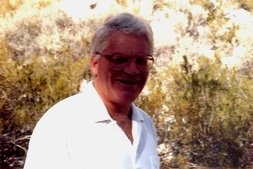
Lawrence Scarborough
Apple vs Microsoft
Lawrence Scarborough is the Managing Partner, Bryan Cave Attorneys at Law, one of the largest law firms in the country. Larry was the attorney who represented Apple against Microsoft in the 1988, 189 copyright infringement case of Macintosh vs Windows. He also represented Countrywide / Bank of America from the onslaught of lawsuits in how they made predatory loans during 2007-2009. Larry Scarborough is by far the biggest and meanest junkyard any court has ever seen.
f you don’t pride yourself on being a techie or computer nerd, here is some background on the most monumental lawsuit in computer history. It changed the course of history.
Read About The Lawsuit: Click Here!
In November of 1985, Microsoft released Windows 1.0, the first non-“C” prompt operating system Microsoft developed, based entirely on the Apple Macintosh Operating System. Steve Jobs became insanely furious and began negotiating with Bill Gates to not steal Apple’s Operating System. Then, to Apple’s / Job’s surprise, Microsoft released its Windows 2.0 on December 9, 1987, which contained even more design elements copied straight from the Macintosh Operating System. After 2+ years of Steve Jobs unsuccessfully o negotiating with Bill Gates, Apple filed a lawsuit against Microsoft for 189 counts of copyright infringement on March 17, 1988.
Unfortunately for Apple, on July 25, 1989, Judge William Schwarzer ruled that 179 of the 189 contested visual displays that Apple claimed infringed in its copyrights were covered by the existing license, and the rest weren’t eligible for copyright anyhow because of the merger doctrine (which holds that ideas cannot be copyrighted).
After a number of appeals, the legal battled ended on February 21, 1995, when the Supreme Court denied Apple’s petition for writ of certiorari. Larry lost, everything, all counts, even the appeal.
I met Carl at the Portland airport and we jumped in his car and headed off to The University of Washington in Seattle. Also in the car was Jack N., a Portland attorney who arranged the meeting. On the ride up Interstate 5, I learned the meeting would be with two others, Dr, Thomas Furness, the inventor of Virtual Reality (who will also be a guest), and Bill Gates Sr. When we arrived at the U of W, we quickly went to a small conference room. I could not believe the two who were present. Bill Gates’ dad and the inventor of Virtual Reality!
We three talked for hours! Dr. Furness and I discussed the applications of V.R. and he told me that through the government Technology Exchange program, He got to keep his 18 years and more than a dozen Ph.D.s work on V.R. they had done at the Wright-Patterson Airfield in Ohio under continuous DARPA grants. And, as a matter of fact, the semi-tractor trailer with more than $5m of computer equipment was arriving that very afternoon.
The U of W, agreed to give him a lab and unlimited access to students to continue his development of practical applications of V.R. One of which was working with Boeing Aircraft, also based out of Seattle on designing the very very first aircraft ever designed using V.R., which became the Boing 767.
We talked about creating a field of grass where each clump of grass represented a NASDAQ stock and by virtually walking through the field you could tell by the height and color of the grass, which stocks were doing the best. And creating a world where you could grab a brush and create a running waterfall, and a stream, throw puffy white cloud up into the sky, and pull mature trees out of the ground all with the wave of your hand.
After several hours of brainstorming, I asked him why he wanted to meet with me. Why me? He said, “I have been working on Virtual Reality my whole career, nearly 20 years, and working with a team of 18 Ph.D.s. to finally come up with a system that costs more than $5m.” He continued, “And you came up with the same system… right here in front of me… with all the same components… Virtual representations of the real world complete with sound… and, instead of $5m, here it is commercially available for under $2500… And you did it yourself… I had to meet you!”
We went back to brainstorming and I suggested that he keep his ideas to more practical applications.
Applications that could be used more widely by the general public. I suggested what if… “What if you created a virtual assistant. One that would keep track of your files, could book appointments, make telephone calls, and perform routine tasks.” I said, “You will have to incorporate artificial intelligence, which I am familiar with and had that experience.” I was hoping Dr, Furness seeing the potential and him funding a project that could keep my company alive.
Sidebar:
Disclosure
In December of 1994, my wife and I went to the movies. We went to see the movie “Disclosure” with Demi Moore and Michael Douglas. Disclosure was based on a book by Micheal Creighton. As we watched the movie together we began looking over at one another. A lot of the plot and the advanced technologies described and shown in the movie were strangely similar, almost exact to the conversation I relayed to her when I returned from the meeting with Thomas Furness. Oddly enough the movies tech company was based in Seattle, It mentioned a professor at the University of Washington, and even had a virtual assistant that could keep track of files, make appointments, make phone calls, and more. Does this sound familiar at all?
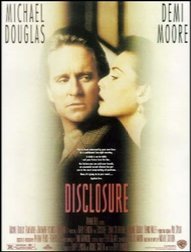
I recall, Michael Douglas character, remembers that the merging company’s executives had a virtual reality assistant, on a demonstration machine that has access to company databases, and the plot further included a character named Spencer, who says he is the research assistant for a Professor Arthur Friend at the University of Washington.
Tom walked us back to the conference room after a brief lunch in the cafeteria. He told us he had to leave the meeting to meet the truck with al of his equipment that was arriving downstairs. He suggested that Bill Gates Sr. and I stay as long as we liked and discussed the SenSei product and a possible investment or even an acquisition. I was elated!
We talked about “My Boy Billie” as he referred to his son. this cracked me up that at the time Bill Gates Jr., was the richest man on earth and his dad still calls him, My Boy Billie. We talked at length about the product, the size of the market, the I.P. protection I had*, and I showed him all the features I had developed over the past decade.
Sidebar:
Copyright vs Patent
Back in those days, there was a huge problem with protection. The only protection we have is by either being awarded a copyright or a patent from the USP&TO, or The United States Patent & Trademark Office in Alexandria, VA, essentially, Washington, D.C. As software was still new to that office, they knew it wasn’t tangible like a Ronco Slicer – Dicer, so they pushed all software into their copyright office.
The problem with a copyright was, it only prevents someone from, as they say, not doing the work necessary to create an original work of art. Meaning, they will only protect you from someone actually making a copy of what you did and selling it, not stealing your ideas, applications, customer base, etc. So, as a result, software, if it was rewritten to do the exact same task, would not be a “copy”, but an “original work.”
Bill Sr., was thoroughly impressed, especially considering the accolades and blessing from the inventor of Virtual Reality. He asked if he could take my hard drive with EVERYTHING on it to show My Boy Billie” as he was sure this would be something he’d be interested in seeing.
Sidebar
Pissed Waiter
After the meeting and 2 1/2 hour drive back to Portland, Carl had promised me a nice dinner. Not extravagant, but nice. We dropped Jack off and proceeded to the restaurant. We had a nice dinner discussing the day’s events. Dinner was over and the bill came. Carl seemed somewhat agitated and I asked him if everything was OK. He assured me everything was fine, placed the money on the table and we both left the restaurant and began walking towards his car.
Suddenly, behind us, there came some loud male yelling. I turned to see the waiter running across the parking lot in the dim light of the street lights. Carl motioned me to continue to the car and said “I’ll take care of this, you go, go to the car.” He began walking towards the waiter. I slowly walked to the car as Carl instructed.
I could hear the waiter yelling at Carl “What did I do wrong!!! Didn’t you like the dinner??? Did I piss you off somehow???” Carl just muttered “No, no, everything was fine…” The waiter then yelled at Carl “The why the F$%^ didn’t you give me a tip! I earned it!” Carl looked at his feet and said… “You did a great job son, I just didn’t have any more money to give you. I am so sorry.” I was so humiliated for all of us.

The waiter stormed away and left Carl standing alone in the parking lot. He stood looking at his shoes for several moments, turn, and walked towards me. We both got into his car and were completely silent all the way to the hotel. I never did tell Carl I heard what the argument was about.
It was several weeks and I hadn’t heard back from Bill Sr. and I was even more desperate for some type of influx of cash to save my company than ever, I contacted him. He regretted to inform me, My Boy Billie would not be investing in my company and that he would send my hard drive back to me which he did. I was devastated and so was my company
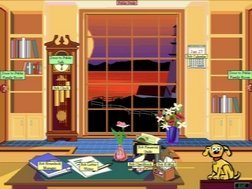
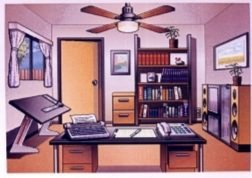
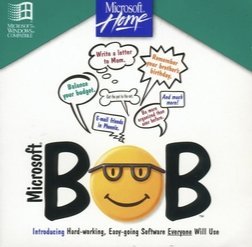
Then on March 11, 1995, saw the front page of the business section of the Wall Street Journal and saw a screenshot of SenSei, my operating system. But it wasn’t SenSei, it was Bob, a new operating system that was going to replace Windows and Microsoft’s premiere Operating System. It didn’t take long to connect the dots! I was had… Again. This time by both Bills!
I knew I had to stop them, but no one, I repeat, no one has ever successfully sued Microsoft and won. With the about of piracy and outright stealing they did of small companies work*, they knew they could never win as it would set a precedence with the courts and publicly prove their practices.
hey would fit it to the end and they had magnitudes of resources more than any small company like myself and they knew it. It was their business model.
*Microsoft had a long history of stealing products just as they did with their Windows Operating System. Word was stolen from WordPerfect created by Satellite Systems International, and Excel was the stolen concept of Lotus 123.
Safko vs Microsoft
I had to come up with a plan. I was just this little guy, barely making payroll and rent. How would I ever go head-to-head with the industry giant, Microsoft? I had no money, no resources, only a literal stack of paper in the paper trail of my meeting with Bill Gates SR, him taking my hard drive, giving it to Bill Gates Jr., studying it, and returning it. Knowing Microsoft the way I did, I knew I would never be able to win. I did not have even a single rock from my slingshot.
After some consideration, I came upon the idea to call Apple and ask them who represented them in their still fresh and painful lawsuit against Microsoft. I told them what had just happened to me and they laughed at me. They said “Why would you EVER want to hire the lawyer who just lost all 189 counts of copyright infringement when it was so clearly stolen?!” I replied “Because the attorneys that won are still high from their victory. I wanted the loser because he had a personal debt to settle. He would work the hardest of any lawyer I could hire!”
They gave me Larry Scarborough’s contact information. He was a partner at Brown and Bain, attorneys at Law in San Francisco. We had a telephone conversation where I explained I had no money or any hope of ever paying him. The following week he was in my office, sitting at my conference table.
He looked at the foot and a half of paper-trail and said “I can’t tell you what apple spent. I can tell you that you will need $5m to start the case, and an additional $25m to get the case to court and I had 100% chance of losing the case no matter what the paperwork showed.” I was like… Wow… I’m screwed. Again.
I knew the details of how corporate espionage worked and how good Microsoft was at performing it. they were masters at it. About a month sooner, I had been back in New York City to make several presentations to potential stock houses. Goldman Sachs, after seeing the presentation agreed to represent my company in an I.P.O. which was till a long way off and something I couldn’t afford to prepare for. I was positive that Microsoft had been following me and my trip. They didn’t know the particulars but did know I had a positive response from Goldman Sachs.
I said to Larry, what if… “What if we don’t sue. What if all you had to do is write one letter? Would you do that for me without a charge?” Larry agreed. I said, “We both know that suing will trigger Microsoft to pull out all the stops and attack us with everything they had as not to set precedence.
What if we only asked for a ‘cease & desist’? And, we can tell them that Goldman Sach has already agreed to represent us and will financially back us against Microsoft for whatever it costs. I know even Microsoft wouldn’t want to go head-to-head with Goldman Sach. And… We both know that their intelligence will confirm I was meeting with Goldman Sach in New York. They just don’t know what we discussed in private.”
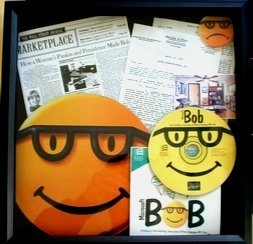
Larry said, you know if we go this route, you won’t see a dime? I told him I knew, but stopping Microsoft, even if we didn’t see any money, it would be worth it. Larry agreed and crafted the letter to Microsoft. Cease & desist or we will come after you with all of the resources of Goldman Sach. On April 14, 1995, that letter went to Microsoft’s legal counsel. Three weeks later, without any explanation whatsoever, Bob and all of the marketing materials were pulled from the market, and Bob was never heard from again. I killed Bob.
Scottsdale Bloodsuckers
They placed $100k into my company and took control. I had no choice, again. $100k sounds like a lot of money, but was only $25k each and for them, it was what they carried around in their wallets. They then called all their friends to invest. We had a lot of rich retired people, a famous rock star, a movie star, and a few famous baseball players. Within 4 months, we raised $1.2m.
At the next Board of Directors meeting, the four began authorizing inordinate spending.
I objected and said we should take a more conservative approach until we had sales enough to expand. While I was the C.E.O, the oil / steel guy looked at me and told me to shut up. My opinion didn’t matter. And if I continued to speak, I would be asked to leave the meeting.
I questioned his authority to say that to me and he replied “You still don’t get the golden rule… The one’s with the gold, rule. It’s just that simple. Now, shut up”.
The Kill Shot
They continued to run my company into the ground until we were out of cash. With no investment left and no sales, we were forced to close down for the final time. Earlier, they had convinced me, it was customary for the C.E.O. to personally guaranty all of the company’s American Express credit cards and lease space. When they finally forced the company to close, I had personally guaranteed $125k to the landlord and $80k to American Express, a total of more than $200k in personal debt. Plus, all the other accounts payable, not paid.
I was forced to lay everyone off without their last paychecks. That was an AWFUL day. I had to rent a moving truck to get all of the office furniture out of the building. I had 35 employees and nearly 4,000 s.f. of office space to vacate. I then rented a storage facility and jammed everything into it.
Over the next 6 months, I once again ran what was left of my company and customer support from a spare bedroom in a condo my wife and I rented after we were forced to sell our house.
I finally was able to make one sale to an outstanding customer by placing all the components on a nearly maxed out credit card. After the delivery, I received the check and quickly placed it in the bank to pay the credit card, and… all of the money was ceased due to a judgment from a creditor (the travel agent) I wasn’t aware of. 100% of the money was gone. After all, I actually had less money than I started with.
The Criminal-Four of the doomsday investors became aware that I was trying to keep my company alive from my bedroom. and asked me to lunch. I thought he was s going to propose how we could salvage the company and the shareholder’s value. That wasn’t the case.
When Mr. Tchotchke Restaurant walked over and sat at my table, he began by telling me how upset the criminal investors were that I outsmarted them. He admitted to deliberately destroying the $5.3m acquisition deal I had with Children’s Hospital in Boston, and they had pre-arranged with the bankruptcy judge to buy the company out of bankruptcy for $100k. Once they bought my $5.3m company out of bankruptcy, all of the debt would be eliminated, and all shareholders would be eliminated. They would own the $5m company free and clear for $100k. If not for me outsmarting them.
They were furious when they realized the company didn’t actually own the I.P. I owned 100% of all the intellectual property, copyrights, drawing, code, files, everything, personally. There was an on-going license whereby, I gave an exclusive license to the company for everything for $1 per year, and that everything would revert back to me if in the event the company became insolvent or didn’t pay the $1. He knew the company which was nearly dissolved, hadn’t made the $1 payment and all of the rights had reverted back to me.
I explained I did that to protect the product for the disabled from unscrupulous people like him and his felon friends who might cease control of the company and try to steal the I,P. for themselves. And, that the agreement was part of the Diligence package I gave them for their initial investment. I guess they never read it because they were sure they were smarter than me.
Still sitting across from me at the lunch table, he said to me “I am here on behalf of the three other partners and myself to tell you… If you or Sherrie benefit from this product in any way, we will use all of our combined resources to guarantee that you and your wife live out the rest of your life in a trailer park.” After several moments of complete disbelief, I quietly stood up and walked out of the restaurant.
They were furious when they realized the company didn’t actually own the I.P. I owned 100% of all the intellectual property, copyrights, drawing, code, files, everything, personally.

There was an on-going license whereby, I gave an exclusive license to the company for everything for $1 per year, and that everything would revert back to me if in the event the company became insolvent or didn’t pay the $1. He knew the company which was nearly dissolved, hadn’t made the $1 payment and all of the rights had reverted back to me.
I explained I did that to protect the product for the disabled from unscrupulous people like him and his felon friends who might cease control of the company and try to steal the I,P. for themselves. And, that the agreement was part of the Diligence package I gave them for their initial investment. I guess they never read it because they were sure they were smarter than me.
Character Assassination
The following week while looking for work to try to pay off the insurmountable debt they had tricked me into personally guaranteeing, I notice my friends in the business community would not accept my telephone calls, not accept my requests for meetings. I thought it strange that presidents of the city’s biggest companies, people who actually handed me the award for my work, were now ignoring me.
What I hadn’t realized was the partner stole my Rolodex from my desk the day I was boxing up the office where my 35 employees worked only a few weeks earlier. He and his partners systematically had a private investigator go to each contact and say “We aren’t saying this is true, but I am investigating Lon Safko, the President of Safko International for stealing / embezzling more than $3/4m from the company’s shareholders. Do you know anything about that?”
I never got a meeting, a phone call, or a job in that city again. This, I later found out, was a tactic they had used many times in the past. They knew if they could bankrupt my wife and me, we would never have the resources to come after them.
Several years later, I was contacted by the president of another company they had done exactly the same thing. My testimony was grounds for suing them under the 1934 Racketeer Influenced and Corrupt Organizations Act (RICO). While it saved his company and threatened the four with serious jail time, he was awarded $3m and I received nothing. He later gave 100% of the proceeds from the suit to charity.
General Magic
Or, General Maggots… Outside the Apple organization, there was an elite group of engineers. Technical people who got to work on newer generations of technology. They were called Apple’s Advanced Technology Group. this group was assigned to review all of my software, hundred of megabytes of my software every other month.
They would go through it with a fine tooth comb to be sure it worked properly and didn’t violate any of the 26, 4” Apple Developer Binders that were the bible, collection of books, that every developer had to follow to the “t’”.
If you deviate at all from their design specifications, the ATG, would send you a letter explaining what you did wrong and you were given a certain amount of time to fix the error and resubmit your software. If you didn’t pass, you were no longer allowed to call yourself “Apple” software or even mention Apple or use their logo until you were re-certified. It was a very stressful process.
With 125 applications and utility titles before the advancement of hard drives, the largest hard drive you could buy was 1mb. In case you don’t understand the 1mb designation, it means only one megabyte of storage. As a result, we were forced to use 3.5” floppy disks which held 1.44mb of data.
The software submission took 25, 3.5” floppy disks that had to be compressed and segmented by a special app. At Apple’s end, they would have to reassemble the 25 separate disks back into a single disk image to allow it to run. This was a tedious process, that often failed.
One of the more interesting ATG team members was one that on his business card said “Animal Interface Engineer”. He received that title after working with dolphins in Hawaii for the United States Navy where he taught them how to run a Macintosh, underwater, using mirrors. We would hang out together during the Friday afternoon “Quad Parties” and drink way too much beer.
This group had 100% access to all of my proprietary software, designs, and ideas. I remember one of our biggest arguments was over the latest software version’s User Manual. I created the world’s first electronic User’s Manual using SuperCard. You could open it like an app and turn the pages by clicking on the page corners, and look at photographs, see diagrams, and even hear audio and watch videos!
Apple refused to give me clearance on this version of the software because I didn’t provide them with a paper User’s Manual. I explained that a quadriplegic couldn’t hold a paper manual and anyone with any disability could open and read my electronic manual as well as abled bodied people. They refused to sign off on this version of the software until I provided a professionally design and printed paper manual.
I remember scrambling to have a friend of mine convert the contents of the User’s Manual app, back into text, professionally lay it out, and have it professionally printed and bound. It cost me close to $1,000 to have this done in the shortest possible time frame so we could continue to sell and not be shut down. The final product of that $1,000 fire drill, was only three copies of a paper User’s Manual. One went to Apple, and the other two went into our files, never to be opened again.
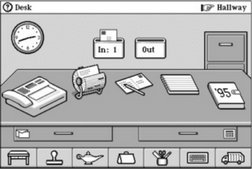
During this time, Apple was working on a secret project that even with a half of a keg of beer in them, the ATG team members would never divulge. Then on May 8, 1993, Apple released the Apple Newton MessagePad 2100, running a new, Newton Operating System that looked awfully familiar!
Apple’s ATG sole my SenSei Operating System!
I began calling my contacts at Apple only to be getting the runaround. No one at Apple was willing to discuss this with me. Then to add insult to injury… The latest Macintosh O.S. was released and contained nearly 100 of my inventions and proprietary designs!
I finally did get one of my associates from Apple’s ATG on the phone and said “WTF!” before WTF was even a thing. I asked, “How could you just steal all of my ideas like that?” He said, “I know, I know. We took them because they were so good.” I retorted “WHAT?! You can’t just do that!”
He replied, “Yeah, but we did..” Then there was a familiar click, telling me the phone conversation was terminated.
The Apple Newton became the predecessor to the iPhone and many of the features I invented, owned, and copyrighted went from being the Newton design, and is now in the permanent design of all the iPhones.
One of the more notable inventions that were stolen was Tool-Tips.
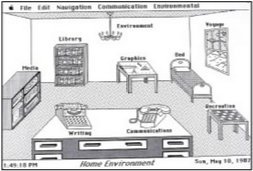
You know that when you move your cursor over a button and a small window opens (called a modal), and it explains what that button does? I copyrighted that on March 7, 1986.
You know how handy it is. You instantly know what that button does. Well, for the severely disabled who cannot hold a paper User’s Manual (remember the paper User’s Manual), it could teach them how to use the computer or software. All abled-bodied user Tool-Tips too! They are like curb-cuts meant for wheelchairs and walkers, but kids on skates, skateboards, bicycles, and moms with strollers all use curb-cuts.
Tool-tips is mine along with 100 other ideas Apple has in all their iOS’s.
Sidebar:
Just to make this unfunny chapter even less funny. When Microsoft stole the Macintosh Operating System, guess what? They stole all of my inventions too! That’s why whether you use Mac O.S. or Windows, there’s Tool-Tips which Microsoft calls “Word-Balloon-Alerts” (and the others).
So, here we go again!
I found out that the Apple ATG quit Apple in 1990 and either licensed and stole the best ideas they were working on while at Apple, including my O.S. and other inventions. They formed their own company called General Magic. General Magic teamed up with Apple for the idea, Motorola for the chip, and Sony for the display.
After weeks on the phone with Apple Headquarters trying to get either my operating system out of the Newton or get paid a royalty for its use, I got nowhere. No one would admit they broke the law and was infringing on my copyrights. Finally, I had my legal counsel file copyright infringement lawsuits along with a cease and desist against Apple, Sony, Motorola, and General Magic. An electronic, clickable bookshelf! What a great idea!
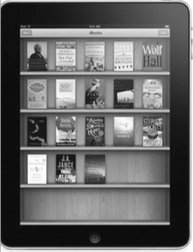
It was only a day after Apple got served, I got a call from my Apple Rep at Apple HQ, and he said “Hey! I see you filed a lawsuit against us.” I answered, “yes, I did.” The Apple Rep said, “You do know that you are a VAR for Apple, right?” I answered, “Yes.” He went on to say “You do know that all of the equipment your company buys comes from Apple, right?” Once again, I answered “Yes.” And, he concluded, “Then you realize that unless you drop all of the lawsuits again us, Sony, Motorola, and General Magic within 24 hours, you will never buy another piece of Apple equipment at wholesale, ever, again, right?” I hung up on him and called my legal counsel.
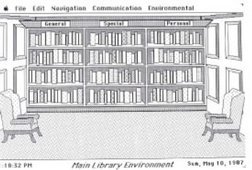
My lawyer said, “He’s right. Is this a fight you are willing to take on against companies you can never win, with money you don’t have, at the expense of your company?” I quietly said, “No, I guess not.” He concluded with “Then you have to just walk away and let them have it. You have no choice.”
I walked away, again. But to this day, every time I use Tool-Tips, it delights me how well it works while at the same time it pisses me off that all of them got away with it again.
In 2018, the original ream at General Magic released a movie about their early days in Silicon Vally called General Magic, IMDb: https://www.imdb.com/title/tt6849786/
This movie whines and chronicled how difficult and unfair it was trying to build their company in Silicon Vally and how everyone was always trying to steal their ideas. Oh, how my heart bleeds for them.
Vignet:
The Chicken or the Pig
I learned an important lesson one morning in Portland, Oregon while having breakfast at a Denny’s with a great friend of mine Zane Sealy. He was the person who invented Grab-On, the foam grips you see on hammers, bicycles handlebars, and tennis racquets and we were talking about the life of the Innovator. The subject of commitment came up, which he believed was critical to Innovation.
He asked me if I had ever heard of the commitment story about the “Chicken and the Pig”.
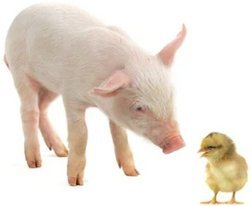
When I told him I had not, he asked me to look down at my breakfast. He asked “What do you see?” I answered “Bacon and eggs, why?” He asked me “Who made the commitment and who made the contribution to that breakfast?” All of a sudden I understood. The chicken made the contribution with her egg, but the pig made the commitment to that meal with its life.
The idea is, that unless you are absolutely committed and have no other choice, you may not be forced to be your most Innovative. The commitment may be as simple as just giving your word, setting a date for delivery, taking someone’s check, or most often just your own personal debt.
The question is, when you see the most famous, best tight rope walker who performs without a net, ask yourself the question; is he the best and doesn’t need the net or is he the best because he doesn’t have a net. Subtle different question, but completely different answer.
King of Prussia
In late 1990, a contact of mine informed me that there was Saudi Arabia money coming into the U.S. from a very rich oil prince and was being administered by an assistant to the Prince, Fuad Sadic. They were looking for companies to invest in that met an altruistic criteria that had placed on the multiple, multi-million dollar investments. I quickly jumped it. Even though I had a problem with their human rights issues and how they were manipulating the oil prices, I still needed to fund my starving company. The ethical question haunted me but was driven away out of desperation.
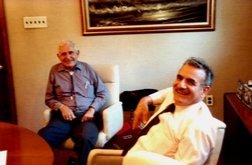
I received the contact information and quickly developed a specific business plan that addressed the Saudi’s investment criteria. We worked tirelessly into the early morning hours to get it done quickly as not to lose the opportunity for investment by another entity. The business case was completed, proofed, printed, and Federal Expressed off to their offices in King of Prussia, PA. Now we waited.
About 10 days later I actually received a call from the Saudi investment group. They like the business plan and felt it met their criteria. They wanted to meet me in their Pennsylvania offices as soon as I could get there. I mustered the money for airfare, contacted my uncle who lived in New York and talked him into taking a road trip with me from New York to Pennsylvania. In less than a week, myself and my uncle in tow were headed south on the New Jersey Turnpike.
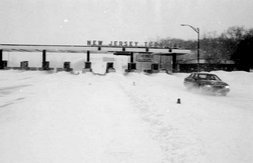
We met with Fuad and did the full dog & pony show. There were more dogs and ponies that anyone could count. It was a hell of a presentation. It had to be as my life, my family’s life and the lives of my employees were on the line. The meeting went great! Fuad loved the technology and agreed to fund my company on the spot. He assured us that after completing some additional paperwork and getting the approval of the Prince, we would see our first check.
The ride north back to New York was awful. We were neck deep in snow and the major blizzard predicted had not yet even hit. It was our optimism and gratitude to the gods that keep us plodding north. We were victorious! For the first time since my company’s beginning, we would have enough money to get a proper office, buy a small inventory, hire the necessary people, complete some badly needed development, and pay our bills. Despite all the snow, our outlook was sunny!
I was so excited, I asked my uncle to pull over at a rest stop so I could call my wife and tell her the good news. The news that she could take a deep breath and loose some of her worries. It was a great conversation and I couldn’t wait to return home. The following morning I left LaGuardia Airport in New York for home. I was so happy and relieved.
When I returned home, we actually celebrated with champagne. O.K., with was Andre’ the cheapest champagne we could buy at $2 a bottle, but it was a celebration none the less. Now we waited for the documents to be complete and FedEx’ed to us for final execution and we were ready to go!
It was about two weeks later the doorbell rang. It was FedEx with an envelope postmarked King of Prussia, PA. These were the final documents. I ran into the house and tore the envelope open. YES! It was the final documents! Sign here, sign here, sign here. We grabbed our pens, signed everywhere we needed to and by that afternoon, that same afternoon, the executed documents were on their way back east. And, once again, we hurry up and wait. The clock was ticking.

We began identifying the potential employees we needed and made them offers. We identified what inventory we needed and even started to look for new, larger office space. We wanted to be sure that no time was lost whatsoever in our next exciting growth stage once the money was available. Then the call came on a Monday morning. And, it’s not what you think. It was Fuad Sadic telling me everything was approved, all the documents were complete and the Prince himself was excited to be partnering with us to help the disabled. Fuad enthusiastically announced the first round of financing, 1/2m would be deposited in our account in two more days, on Wednesday.
Wednesday morning came and neither my wife nor I could sleep. We were up with the birds. With our coffee cups in our hands, we waited for the clock to ring 9:00 AM so we could go to the bank and verify the deposit. With several hours to kill, I suggested we take our coffee and head to the couch for a little television. I put on CNN and kicked back feeling fully relaxed for the first time in years.
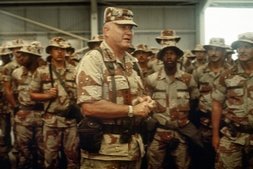
I turned on CNN Headline News and saw it. I couldn’t believe my eyes. There, on the television screen in front of us, we both watched completely stunned. It was Wednesday, January 16, 1991, the day George H. Bush started the Persian Gulf War; Operation Desert Storm and deployed forces into Saudi Arabia. As we watched General Norman Schwarzkopf blazed his trail into Saudi Arabi we knew what had happened to us.
I quickly ran to the phone and began calling the Fuad’s offices. For the first several days, the phone rang unanswered. By the end of the week, all we would hear was the family message “We’re sorry. The number you are calling has been disconnected or is temporarily out of order.”
My wife and I finished our coffee on the couch watching the start of the war and our first introduction to Wolf Blitzer. Once our cups were empty, I turned to her and quietly said. I’m going to head to the office now. I have a lot of work to do. I love you and I will see you tonight. She answered. “Don’t be too late…”
Additional Stories, Just Ask!
- The personal call from John Sculley
- Russ DeVan and the MLM $250,000 pay off
- The Bobs and the near SEC scandal
- Moreise Bardran and the Keven Stamper Darth Vader Boeing CEO catch 22.
- Plus a whole lot more